8.7· 3 reviews
Tapajós National Forest Tour
Venture into the Brazilian rainforest and discover the animals that live there on our 1 or 2-day Tapajós National Forest Tour.
2 days
from US$ 77
Alter do Chão is worth 3 to 4 days. The best window runs from August to November, when the river drops and the beaches appear: rainfall is 54 to 71 mm a month and highs are 32 to 33 °C. From February to April, by contrast, 274 to 383 mm a month fall and a good share of the beaches ends up underwater.
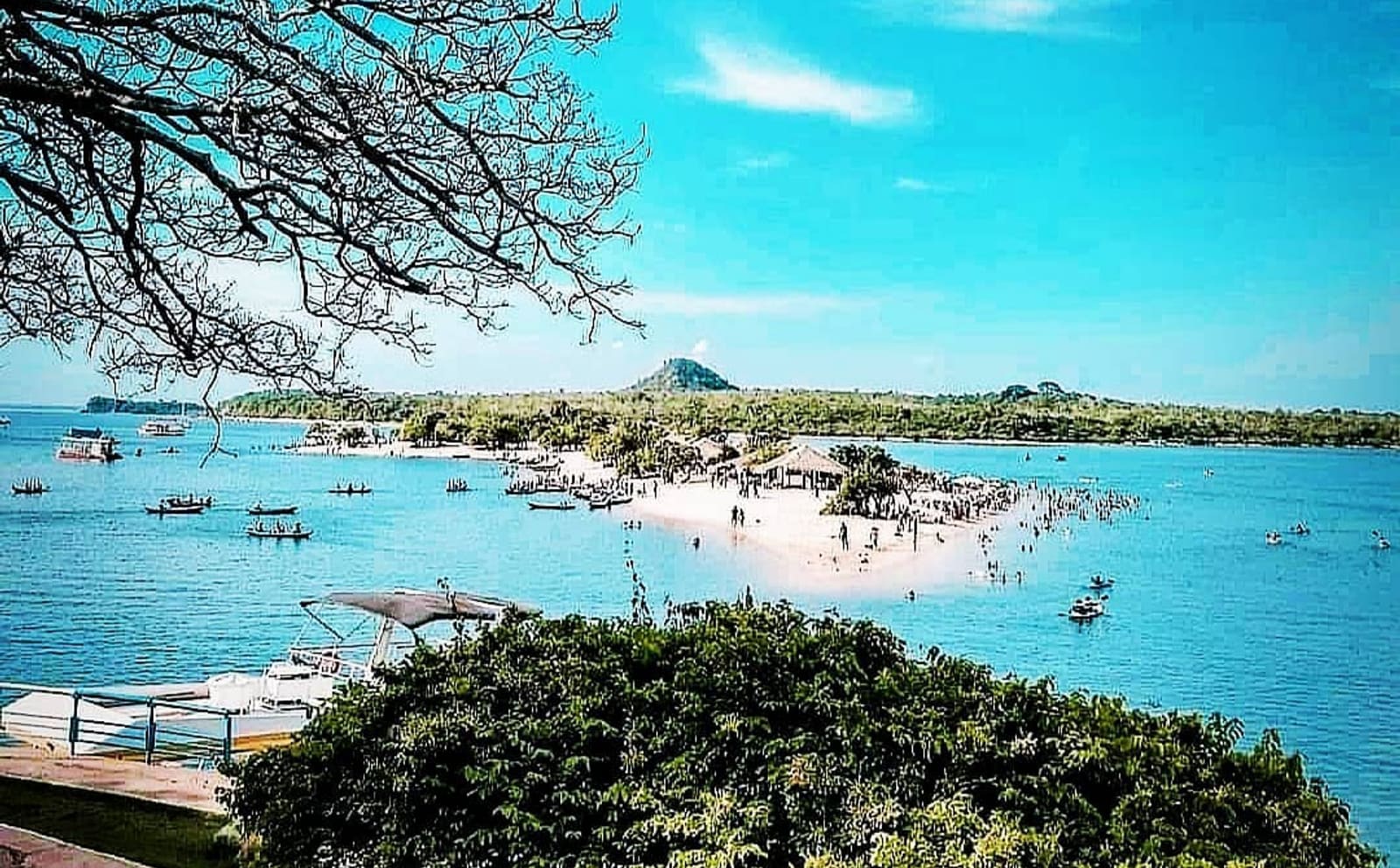
Alter do Chão is a village in the municipality of Santarém, in western Pará state, on the right bank of the Tapajós River. It is known as the Amazon's Caribbean for its fine white-sand beaches and the clear blue water of the Tapajós, a clear-water river rather than a sea. In 2009, the British newspaper The Guardian named it the most beautiful freshwater beach in the world, which helped put it on the international map.
The landscape changes with the river's cycle. In the dry season, roughly August to January, the Tapajós drops and exposes broad white sandbanks, including the Ilha do Amor (Island of Love), right in front of the village. When the river rises, a good share of those beaches disappears underwater. That is why Alter's beach season peaks in the months when the river is low, especially between September and December.
The region has deep Indigenous roots: it was home to the Borari people, who still live there, and it holds archaeological traces such as pottery and stone artifacts. That heritage shows strongly in the Festa do Çairé, a celebration of Indigenous and Catholic origin that has existed for about three centuries, was banned in the 1940s and revived in the 1970s as a folk event. Today it draws tens of thousands of visitors in September and is the biggest cultural event in western Pará.
Updated on October 19, 2026
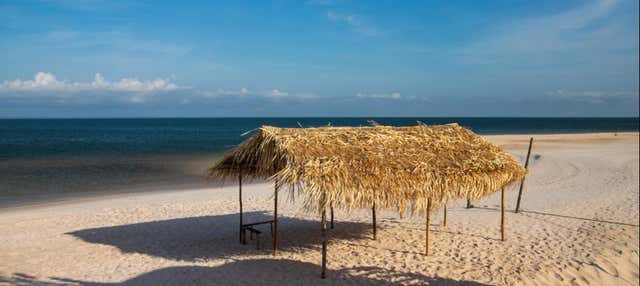
A sandbar that emerges when the Tapajós drops, in front of the village, separated from the shore by a shallow channel of warm, clear water. It is the postcard image of Alter do Chão; the canoe crossing and whatever you buy at the beach shacks are paid separately.
A calm, greenish lake behind the Ilha do Amor, connected to the Tapajós. People come for a relaxed swim and for canoe rides among the vegetation.
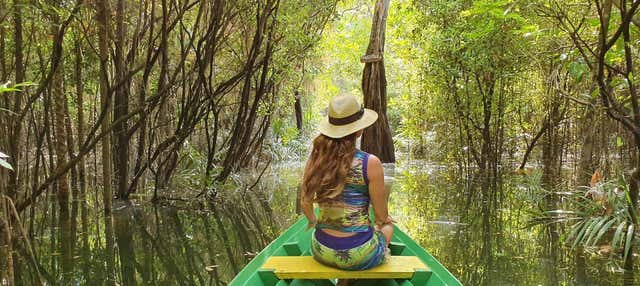
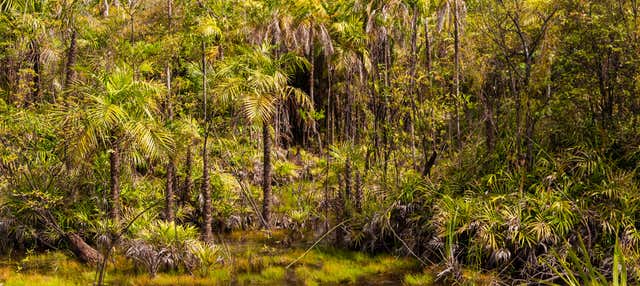
A federal conservation area created in 1974, with about 527 thousand hectares, managed by ICMBio. Trails guided by local residents lead to giant trees, such as the kapok known as Sumaúma Vovó.
A beach with rock formations on the banks of the Tapajós, about 15 km from Alter do Chão. It is known for its crafts and for fish-based food, with the charutinho appetizer as the star.
The highest point in the region, at about 110 meters of elevation. The trail of roughly 2 km leads to a lookout with a 360-degree view over the Lago Verde, the Tapajós River and the rainforest.
The biggest cultural event in western Pará, held in the first half of September. It brings together traditions of the Borari people, riverside culture and Catholicism, with the staged contest between the Boto Cor-de-Rosa (pink river dolphin) and the Boto Tucuxi as the highlight.
Brazil is in the Southern Hemisphere, so the seasons run opposite to those in Europe and North America. In Alter do Chão, though, the temperature barely changes through the year: highs range from 30 to 33 °C, with October the hottest month at 33 °C, and in July, the coolest month, the average low is 21 °C and the high is 31 °C. What defines the year is the river and the rain.
The driest months are October (54 mm over 5 days), September (58 mm over 7 days) and August (64 mm over 8 days). The wettest are March (383 mm over 22 days), April (347 mm over 21 days) and February (274 mm over 18 days). During that high-water season, many beaches are submerged.
To see the white-sand beaches, the best window runs from August to November, with October the best month. It is only a guide based on historical averages: the river level and the rainfall of each year can vary. The reference climate data is from the Santarém station.
| Month | High | Low | Rain | Rainy days | Rating |
|---|---|---|---|---|---|
| January | 31 °C | 22 °C | 194 mm | 16 | Not recommended |
| February | 30 °C | 22 °C | 274 mm | 18 | Not recommended |
| March | 30 °C | 22 °C | 383 mm | 22 | Not recommended |
| April | 30 °C | 22 °C | 347 mm | 21 | Not recommended |
| May | 30 °C | 22 °C | 274 mm | 22 | Not recommended |
| June | 31 °C | 22 °C | 152 mm | 16 | Not recommended |
| July | 31 °C | 21 °C | 130 mm | 12 | Not recommended |
| August | 32 °C | 22 °C | 64 mm | 8 | Fair |
| September | 32 °C | 22 °C | 58 mm | 7 | Fair |
| October | 33 °C | 22 °C | 54 mm | 5 | Good |
| November | 33 °C | 23 °C | 71 mm | 5 | Good |
| December | 32 °C | 22 °C | 120 mm | 10 | Fair |
Monthly averages for 1991-2020 from INMET (Brazil's National Institute of Meteorology). The rating combines rainfall, temperature and humidity.
In summer (December to February), Alter do Chão has highs of around 31 °C (88 °F) and lows of 22 °C (72 °F), and it is the wetter season, with about 196 mm of rain spread over about 15 days a month. The days are hot and call for beach time and shade.
In fall (March to May), Alter do Chão has highs of around 30 °C (86 °F) and lows of 22 °C (72 °F), and it is the wetter season, with about 335 mm of rain spread over about 22 days a month. The days are hot and call for beach time and shade.
In winter (June to August), Alter do Chão has highs of around 31 °C (88 °F) and lows of 22 °C (72 °F), and it is the wetter season, with about 115 mm of rain spread over about 12 days a month. The days are hot and call for beach time and shade.
In spring (September to November), Alter do Chão has highs of around 33 °C (91 °F) and lows of 22 °C (72 °F), and it is the driest time of year, with about 61 mm of rain a month. The days are hot and call for beach time and shade.
Weather, crowds, prices and what is happening at the destination in each period. Tap a month to open its full page; the colored dot shows how good the time is for a visit.
A traditional festival that combines religious ritual with the festival of the botos (river dolphins), featuring the contest between Boto Tucuxi and Boto Cor de Rosa, in the third week of September.
Recurring annual events: exact dates change every year, so confirm them before you plan your trip.
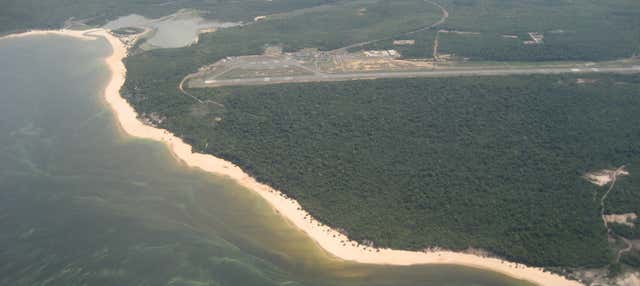
The gateway is Santarém International Airport (Maestro Wilson Fonseca), code STM, in the city of Santarém, about 40 km from Alter do Chão. From there you continue along the PA-457 highway (Everaldo Martins), a 40 to 45 minute drive.
From downtown Santarém, the final stretch by land is 37 km (about 45 minutes) and can be done by car, taxi, transfer or bus.
The routes and airlines that fly to Santarém change often; the safest approach is to check them when planning your trip.
Alter do Chão is a village on the banks of the Tapajós, with the Ilha do Amor right in front. It pays to choose a place to stay near what you most want to see and to allow for the transfer to Ponta de Pedras, about 15 km away, and to the Floresta Nacional do Tapajós, which is visited with a guide and usually requires a boat. If you travel during the Festa do Çairé, in September, the village is very busy and it is wise to book well ahead.
Rates change with the dates: confirm the price on Booking.com.
It is a village in the municipality of Santarém, in western Pará, on the right bank of the Tapajós River, about 37 km from downtown Santarém.
Because of its white-sand beaches and the clear blue water of the Tapajós River, which recall the Caribbean, but in fresh water, in the heart of the Amazon.
The dry season, roughly August to January, when the river drops and beaches such as the Ilha do Amor appear. In terms of rainfall, the best window runs from August to November, with 54 to 71 mm a month. When the river is high, many beaches are submerged.
Three to four days are enough for the beaches, the Lago Verde, the Serra da Piroca and an unhurried visit to the Floresta Nacional do Tapajós.
At the Tapajós beaches, such as the Ilha do Amor and the Lago Verde, you pay separately for the canoe crossing and for whatever you buy at the beach shacks. The Floresta Nacional do Tapajós, being a conservation area, charges a fee and requires a guide.
It is the region's main cultural celebration, held in September, bringing together traditions of the Indigenous Borari people, riverside culture and Catholicism, with the staged contest between the Boto Cor-de-Rosa and the Boto Tucuxi.
The weather and population data in this guide come from official agencies and open databases. Entry requirements and health recommendations change: always check the official source linked.