8· 1 review
Acaiá Cave & Ilha Grande Lagoons Boat Tour
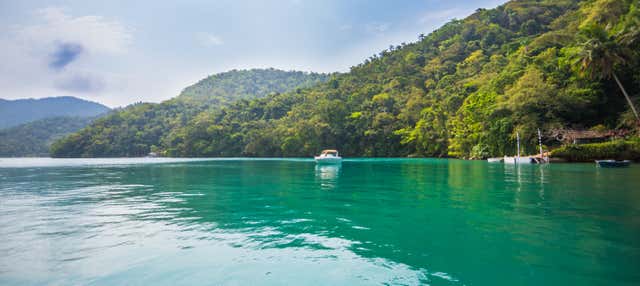
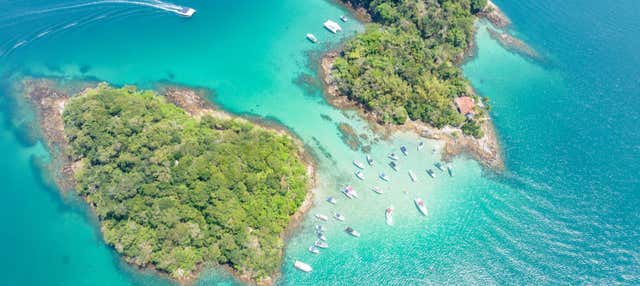
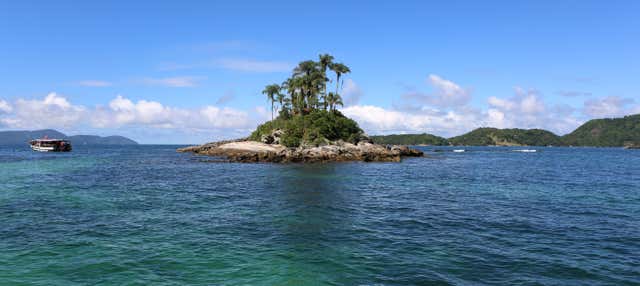
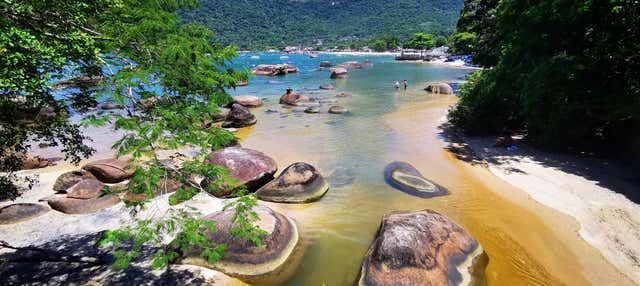
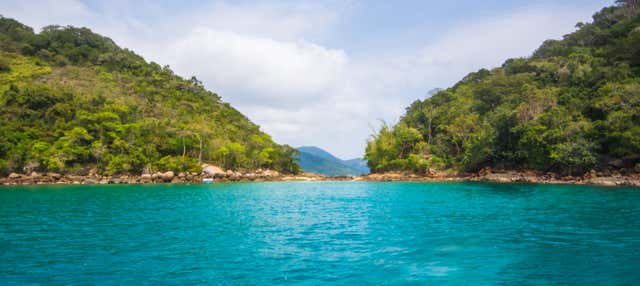
If you're in Ilha Grande, don't miss the opportunity to take a tour around the Acaiá Cave and its main lagoons. You'll fall in love with its landscapes!
7 h
from US$ 46
Ilha Grande calls for 3 to 4 days: one full day for Lopes Mendes Beach, another for a boat trip to the beaches with snorkeling, and another for short trails or the climb up Pico do Papagaio (Parrot Peak). The driest months run from May to August, led by July (41 mm over 6 days), with highs of 26 to 27 °C; summer, from December to March, is hotter (up to 32 °C in February) and much rainier (190 mm in January).
Lopes Mendes appears on almost every list of the most beautiful beaches in Brazil, and once you arrive you understand why. It is almost three kilometers of firm white sand, hard underfoot, with a green sea that changes shade as the sun moves. There are no kiosks, no buildings and no road: to get there you walk close to two hours from Abraão along the forest trail, or take a boat to Pouso and cover the last stretch on foot. That effort is what keeps the beach the way it is.
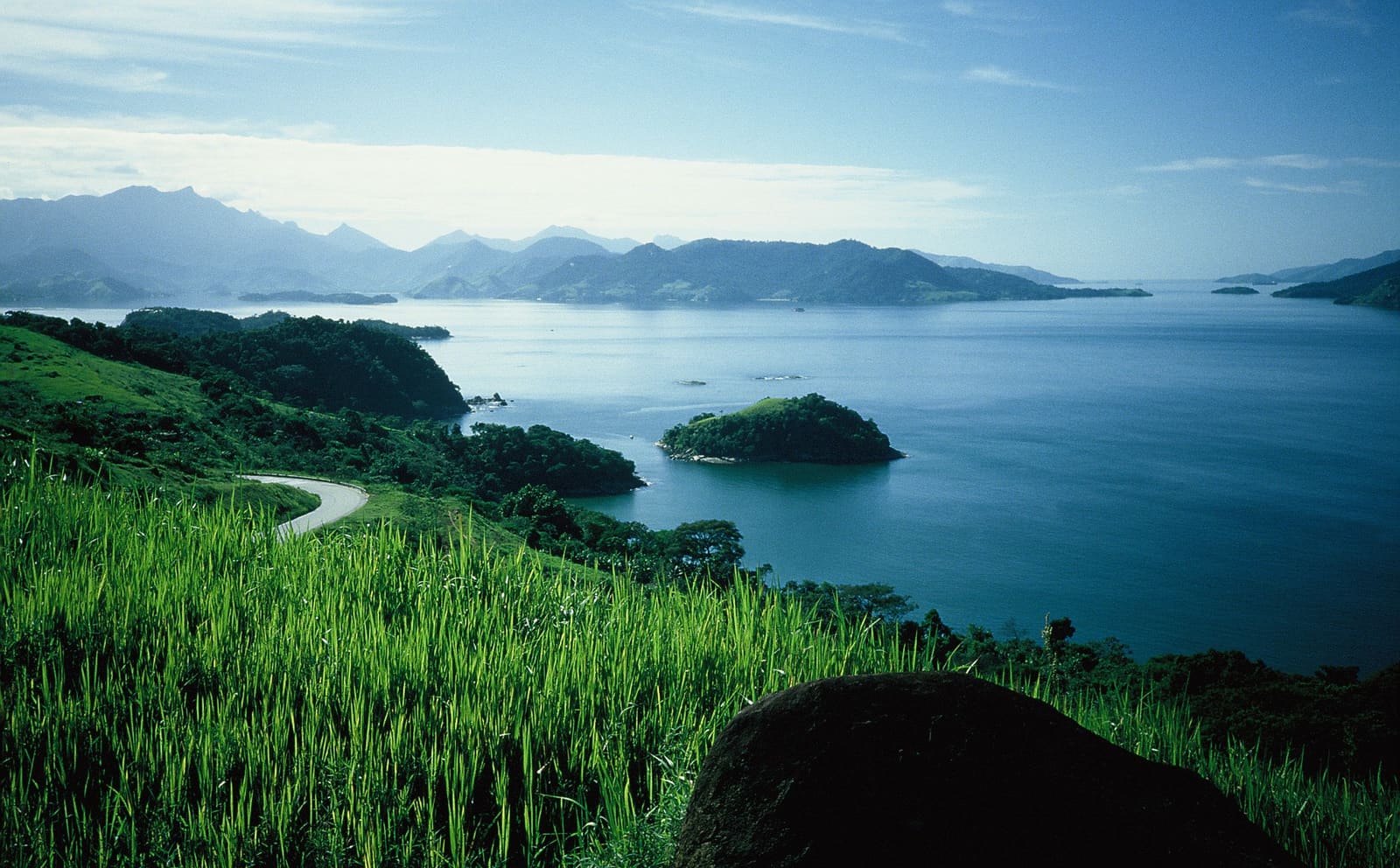
The whole island works this way. More than a hundred trails cross the Atlantic Forest that covers almost all of the terrain: from Pico do Papagaio, at 980 meters, with a view over the whole bay, to short paths that link one cove to the next. Saco do Céu, Lagoa Azul (Blue Lagoon) and Gruta do Acaiá (Acaiá Grotto) are good for whole days of boating and snorkeling: underwater visibility is good, and the shipwrecks and rocks along the coast make Ilha Grande one of the best diving spots in southeastern Brazil.
At the center of it all is Vila do Abraão, where the boats dock and where you sleep and eat. No cars run on the island (you get around on foot, by bicycle or by boat), and that changes the rhythm of the whole trip. The sand streets fill up at dusk, restaurants set tables outside their doors and the night silence is that of a place without engines. Anyone looking for a resort and nightlife will be disappointed; anyone who wants nature, a simple pousada (small inn) and good fish will find just the right place.
Updated on October 19, 2026
Almost three kilometers of firm white sand, with no kiosks or buildings and a green sea of changing shades. You get there by a trail of about two hours from Abraão, or by boat to Pouso and 20 more minutes on foot.
The center of the island, where the boats dock and where you sleep and eat. It has sand streets that fill up at dusk and restaurants with tables out front, without a single car.
A 980-meter summit with a view over the whole bay, among the more than a hundred trails that cross the island's Atlantic Forest.
Three spots visited on boat-and-snorkel day trips, with good underwater visibility. The farther beaches are reached by trail or by booking a boat tour in Abraão.
The shipwrecks and rocks along the coast make Ilha Grande one of the best diving spots in southeastern Brazil. Dive outings are booked with local operators in the village.
More than a hundred trails cross the forest that covers almost the whole island, from long climbs to short paths linking one cove with the next.
Brazil is in the Southern Hemisphere, so the seasons are the reverse of those in Europe and North America: summer falls between December and March and winter between June and August. In Ilha Grande summer is hot, with highs of 30 to 32 °C and lows of 23 to 24 °C from December to February, and winter is mild: in June and July, the coolest months, the average high is 26 °C and the low is 18 °C.
The rain falls mostly in summer. July is the driest month, with 41 mm spread over 6 days, followed by August (43 mm over 6 days) and June (45 mm over 6 days). January is the wettest, with 190 mm over 18 days, followed by December (180 mm over 17 days) and February (168 mm over 15 days).
For walking the forest trails and spending the day on a boat, the best window runs from May to August, with July as the best month. Also, from April to September the sea tends to be calmer and the trails less slippery. Summer is beautiful but it is the high season for rain and for crowds: January and February top 150 mm and fill the village.
| Month | High | Low | Rain | Rainy days | Rating |
|---|---|---|---|---|---|
| January | 31 °C | 24 °C | 190 mm | 18 | Not recommended |
| February | 32 °C | 24 °C | 168 mm | 15 | Not recommended |
| March | 31 °C | 23 °C | 150 mm | 15 | Not recommended |
| April | 29 °C | 22 °C | 98 mm | 11 | Fair |
| May | 27 °C | 20 °C | 62 mm | 8 | Good |
| June | 26 °C | 18 °C | 45 mm | 6 | Good |
| July | 26 °C | 18 °C | 41 mm | 6 | Good |
| August | 27 °C | 18 °C | 43 mm | 6 | Good |
| September | 27 °C | 19 °C | 75 mm | 10 | Good |
| October | 28 °C | 21 °C | 105 mm | 13 | Fair |
| November | 29 °C | 22 °C | 148 mm | 15 | Fair |
| December | 30 °C | 23 °C | 180 mm | 17 | Not recommended |
Monthly averages for 1991-2020 from INMET (Brazil's National Institute of Meteorology). The rating combines rainfall, temperature and humidity.
In summer (December to February), Ilha Grande has highs of around 31 °C (88 °F) and lows of 24 °C (75 °F), and it is the wetter season, with about 179 mm of rain spread over about 17 days a month. The days are hot and call for beach time and shade.
In fall (March to May), Ilha Grande has highs of around 29 °C (84 °F) and lows of 22 °C (72 °F), and it is the wetter season, with about 103 mm of rain spread over about 11 days a month. The days are hot and call for beach time and shade.
In winter (June to August), Ilha Grande has highs of around 26 °C (79 °F) and lows of 18 °C (64 °F), and it is the driest time of year, with about 43 mm of rain a month. Temperatures are pleasant for sightseeing all day.
In spring (September to November), Ilha Grande has highs of around 28 °C (82 °F) and lows of 21 °C (70 °F), and it is the wetter season, with about 109 mm of rain spread over about 13 days a month. The days are hot and call for beach time and shade.
Weather, crowds, prices and what is happening at the destination in each period. Tap a month to open its full page; the colored dot shows how good the time is for a visit.
A centuries-old festival for the patron saint in the Freguesia de Santana, with a dawn greeting, Mass, a procession by sea and forró (northeastern dance music) on the beach.
A free festival in Vila do Abraão that combines Brazilian music concerts, a crafts fair and environmental activities.
Recurring annual events: exact dates change every year, so confirm them before you plan your trip.
You cannot reach Ilha Grande by car. The reference airport is Tom Jobim International Airport (Galeão), with the code GIG, in Rio de Janeiro, about 150 km from Angra dos Reis, one of the boarding ports. From the airport you continue by road to a port on the mainland coast.
The most practical departure point is Conceição de Jacareí, with the most departure times: there are crossings from 8:00 a.m. to 5:30 p.m., every hour, and the schooner takes about 50 minutes and the speedboat about 15. Ferries and speedboats also leave from Angra dos Reis (Santa Luzia Station), with trips of 30 minutes to 1 hour 40 minutes, and from Mangaratiba, with a somewhat longer crossing (about 1 hour 20 minutes). By road, from Rio de Janeiro to the port it is 135 km (about 2 hours 30 minutes) and from São Paulo, 404 km (about 5 hours 30 minutes).
Routes and airlines change often; the safest approach is to check them when you plan your trip. If you arrive by car, you leave it in a paid parking lot at the port before crossing.
The place to stay is Vila do Abraão, where the boats dock and the pousadas and restaurants are concentrated. Since no cars run on the island and everything is done on foot, by bicycle or by boat, the most practical choice is to stay near the village and book boat trips and diving from there with local operators. It is a destination for a simple pousada, not a resort.
Rates change with the dates: confirm the price on Booking.com.
The island has no car access: you drive to a port on the mainland and cross by boat. The most practical departure point is Conceição de Jacareí (about 135 km from Rio de Janeiro and about 12 km from the island), with crossings every hour from 8:00 a.m. to 5:30 p.m.: the schooner takes about 50 minutes and the speedboat about 15. There are also ferries from Angra dos Reis and from Mangaratiba.
Three to four days is ideal. One full day for Lopes Mendes (the round-trip trail takes up a good part of the day), another for a boat trip to the beaches and diving, and another for short trails or the climb up Pico do Papagaio. With less time you lose half the island just to boat logistics.
From May to August: these are the driest months (July, the driest, with 41 mm), with highs of 26 to 27 °C. From April to September the sea tends to be calmer and the trails less slippery. Summer is warm and beautiful, but it is the high season for rain and for crowds: January and February top 150 mm and fill the village.
No. No cars run on the island: you get around on foot, by bicycle or by boat. A car is only useful for reaching the departure port on the mainland, where you leave it in a paid parking lot before crossing. In Vila do Abraão everything can be done on foot.
Lopes Mendes is considered one of the most beautiful beaches in Brazil: almost 3 km of firm white sand, with no buildings and a stunning green sea. To get there, you take the trail of about 2 hours from Abraão, or take a boat to Pouso Beach and walk the last 20 minutes. Bring water and food, because there are no kiosks there.
It depends on the season. In high season (December to February, July and public holidays) the pousadas in Abraão sell out and charge more. Outside those peaks prices drop considerably and the island empties out. Since everything arrives by boat, food and drink cost more than on the mainland. Bring cash.
The weather and population data in this guide come from official agencies and open databases. Entry requirements and health recommendations change: always check the official source linked.