
8.3· 14 reviews
Porto Alegre Airport – City of Gramado Transport
This airport transfer is the best solution to get from Porto Alegre airport to Gramado. A vehicle will be waiting to take you to your hotel.
3 h
from US$ 27
Porto Alegre is worth 2 to 3 days: for the historic center, the Public Market and the Guaíba waterfront at an easy pace, plus 2 or 3 more days if you add a side trip to Gramado and Canela. The most comfortable window runs from January to May, and November is also among the months with the least rain (105.5 mm); summer reaches highs of 31 °C in January and in July winter averages a high of 19.7 °C and a low of 10.4 °C.
Porto Alegre was founded in 1772, when a group of Azorean couples settled on the peninsula formed where rivers meet to create the Guaíba. The city grew as a river port and, from the late 19th century, received waves of German and Italian immigrants who moved up into the Serra Gaúcha and helped shape the gaúcho culture of all of Rio Grande do Sul: chimarrão, churrasco (Brazilian barbecue), the traditional gaúcho ranch sheds. Today it is the state capital and the most obvious gateway for anyone heading to the Serra: Gramado, Canela and the vineyards of the region are less than two hours away by road.
The subtropical climate gives Porto Alegre the most pronounced four seasons of any Brazilian capital. Summer is scorching, with highs above 30 °C and an all-time record above 40 °C; winter is the coldest of any of the country's large cities, with occasional frost and lows close to zero. It rains all year, with no defined dry season, and the wind that sweeps up from the south can drag the felt temperature down from one day to the next. There is no beach in the city: the coast of Rio Grande do Sul is farther away, in Torres. But the Guaíba plays the role of waterfront well.
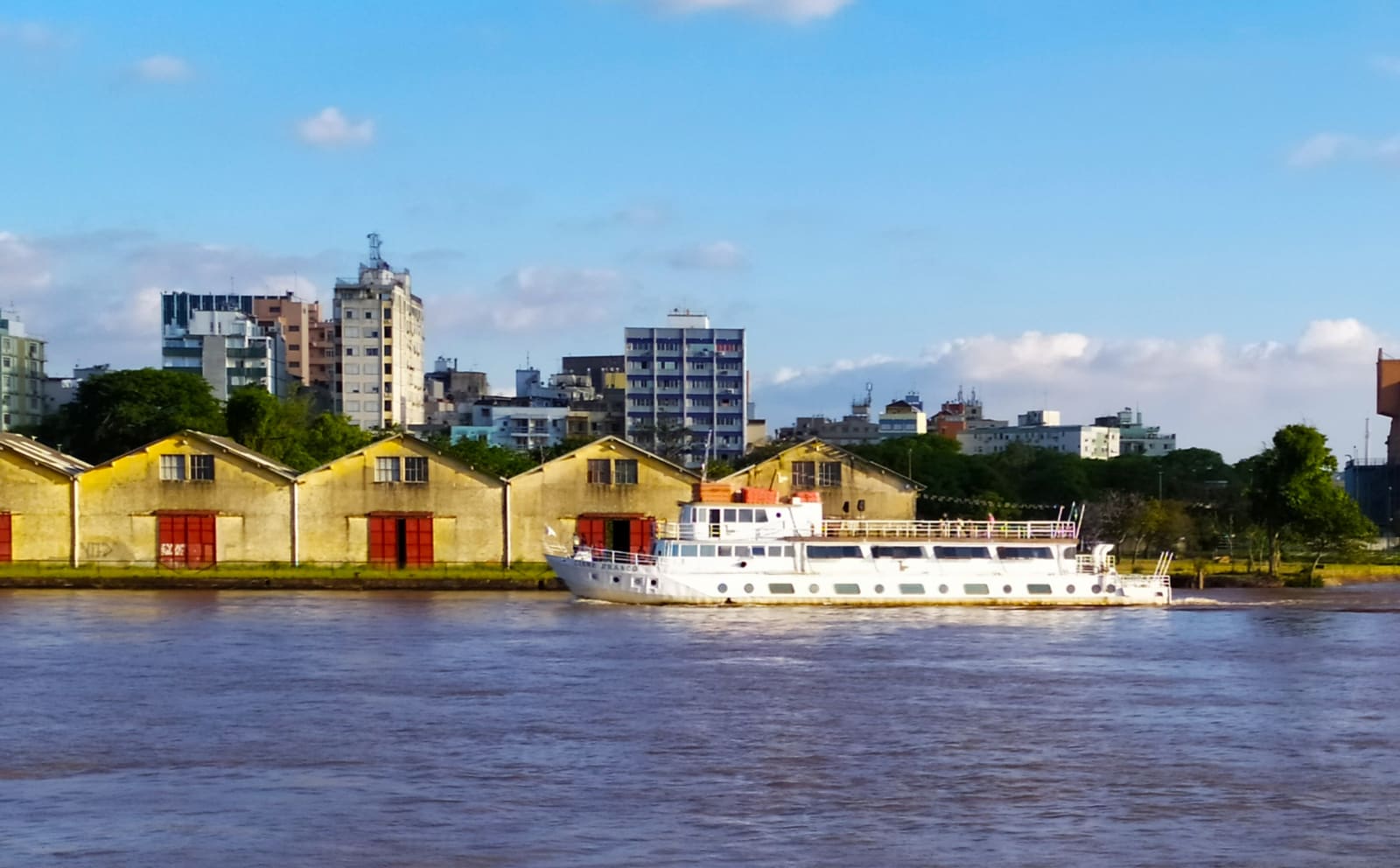
The most gaúcho thing to do is to sit on the waterfront, with a gourd of chimarrão in hand, and watch the sun set behind the Usina do Gasômetro, a scene that gathers locals of all ages in the late afternoon. The city also has the Public Market of 1869, the Brique da Redenção flea market on Sundays, the white architecture of Álvaro Siza at the Fundação Iberê Camargo and a historic center that mixes protected buildings with old warehouses turned into bars. And it works well as a base for anyone who wants to extend the trip to the vineyards and the European-style towns of the Serra.
Updated on October 19, 2026
A former thermal power plant from 1928, with a 101-meter chimney, now a cultural center and the most traditional place to watch the sun set over the Guaíba.
In operation since 1869, it is the oldest market in Brazil that is still active, with stalls selling cheese, yerba mate and spices, and traditional restaurants.
The largest park in the center, named in 1935 on the site of the old Praça da Redenção; on Sundays it hosts the Brique, an antiques and crafts fair held since 1978.
A museum designed by the Portuguese architect Álvaro Siza on the banks of the Guaíba, devoted to the work of the gaúcho painter Iberê Camargo.
A stretch of the historic center, on Rua José do Patrocínio and nearby streets, with dozens of antiques shops; on Saturdays it becomes an open-air fair.
One of the largest botanical gardens in the country, with about 40 hectares and a collection of more than 600 tree species; open Tuesday to Sunday.
A 1.3 km promenade renovated in 2018 to a design by the urban planner Jaime Lerner, between the Usina do Gasômetro and the center; with a walking track, bike lane and bars.
Housed in the former Hotel Majestic, where the poet Mário Quintana lived for 12 years; today it holds libraries, cinemas, theaters and galleries.
Brazil is in the Southern Hemisphere, so the seasons are the reverse of those in Europe and North America: summer falls between December and March and winter between June and August. In Porto Alegre summer is hot, with highs of 29.2 to 31 °C and lows of 19.4 to 20.7 °C between December and March, and winter is cold: in July, the coolest month, the average high is 19.7 °C and the low is 10.4 °C.
It rains all year, with no defined dry season, but there are differences. The months with the least rain are March, with 103.3 mm over 9 days, November, with 105.5 mm over 8 days, and February, with 110.8 mm over 9 days. The wettest are July, with 163.5 mm over 9 days, October, with 153.2 mm over 10 days, and September, with 147.8 mm over 10 days.
The most comfortable window runs from January to May, and November is also among the months with the least rain. Summer is good for enjoying the Guaíba waterfront late into the evening; winter is for anyone who wants real cold and a good excuse for wine and fondue in the Serra, close by. September and October are among the rainiest months, with wind. No month guarantees the weather.
| Month | High | Low | Rain | Rainy days | Rating |
|---|---|---|---|---|---|
| January | 31 °C | 21 °C | 121 mm | 9 | Fair |
| February | 31 °C | 21 °C | 111 mm | 9 | Fair |
| March | 29 °C | 20 °C | 103 mm | 9 | Good |
| April | 26 °C | 17 °C | 114 mm | 9 | Good |
| May | 23 °C | 14 °C | 113 mm | 8 | Good |
| June | 20 °C | 11 °C | 130 mm | 9 | Fair |
| July | 20 °C | 10 °C | 164 mm | 9 | Fair |
| August | 22 °C | 12 °C | 120 mm | 9 | Good |
| September | 23 °C | 13 °C | 148 mm | 10 | Good |
| October | 25 °C | 16 °C | 153 mm | 10 | Good |
| November | 28 °C | 17 °C | 106 mm | 8 | Good |
| December | 30 °C | 19 °C | 116 mm | 9 | Good |
Monthly averages for 1991-2020 from INMET (Brazil's National Institute of Meteorology). The rating combines rainfall, temperature and humidity.
In summer (December to February), Porto Alegre has highs of around 31 °C (88 °F) and lows of 20 °C (68 °F), and it is the wetter season, with about 116 mm of rain spread over about 9 days a month. The days are hot and call for beach time and shade.
In fall (March to May), Porto Alegre has highs of around 26 °C (79 °F) and lows of 17 °C (63 °F), and it is the wetter season, with about 110 mm of rain spread over about 8 days a month. Temperatures are pleasant for sightseeing all day.
In winter (June to August), Porto Alegre has highs of around 21 °C (70 °F) and lows of 11 °C (52 °F), and it is the wetter season, with about 138 mm of rain spread over about 9 days a month. The weather is milder, good for walking and exploring without the summer heat.
In spring (September to November), Porto Alegre has highs of around 25 °C (77 °F) and lows of 15 °C (59 °F), and it is the wetter season, with about 136 mm of rain spread over about 9 days a month. Temperatures are pleasant for sightseeing all day.
Weather, crowds, prices and what is happening at the destination in each period. Tap a month to open its full page; the colored dot shows how good the time is for a visit.
The samba school parades take place at the Complexo Cultural do Porto Seco, the Sambadrome of the state capital.
At Parque Harmonia, the biggest gaúcho (Rio Grande do Sul) tradition festival brings together piquetes (camp sites), chimarrão (traditional mate tea), music and country food around Farroupilha Week.
Held at Praça da Alfândega since 1955, it is one of the oldest book fairs in the country and part of the city's intangible heritage.
Recurring annual events: exact dates change every year, so confirm them before you plan your trip.
The gateway from abroad is Salgado Filho International Airport (POA), in Porto Alegre, about 6 km from the center. It connects to the city by the metropolitan train (Trensurb) and also by taxi or ride-hailing app.
By road, Porto Alegre is 115 km from Gramado (about 2 h), 460 km from Florianópolis (about 5 h 30 min) and 740 km from Curitiba (about 8 h 35 min).
Routes and airlines change often, so it is safest to check them when you plan your trip.
Within the city you do not need a car: the metropolitan train, buses and ride-hailing apps cover the main sights well. Staying near the historic center is an option; the Guaíba waterfront and the Cidade Baixa neighborhood usually stay lively until late. If the plan is to continue to the Serra Gaúcha, Porto Alegre is the most practical base, because Gramado and Canela are about two hours away by car.
Rates change with the dates: confirm the price on Booking.com.
It depends on what you are looking for. Summer (December to March) is hot, ideal for enjoying the Guaíba waterfront late into the evening; winter (June to August) is the coldest of any Brazilian capital, with days of real cold and a good excuse for wine and fondue in the Serra. The most comfortable window runs from January to May, and November is also one of the driest months. Spring tends to bring more rain and wind.
Two to three days are enough to see the historic center, the Public Market and the Guaíba waterfront at an easy pace. If you want to combine the city with a side trip to the Serra Gaúcha, you usually add 2 or 3 more days in Gramado and Canela.
Not within the city. The Trensurb, buses and ride-hailing apps cover the main sights well. A car only makes a difference if the plan is to continue to the Serra Gaúcha or the northern coast.
It is the most practical base there is: Gramado and Canela are about two hours away by car, and a good part of the tours of the vineyard region also leave from the capital. Many people combine 2 days in the city with 3 or 4 in the Serra.
The city has plenty of indoor options: the Public Market, the Casa de Cultura Mario Quintana, the Fundação Iberê Camargo and the shopping malls in the center and the South Zone handle a rainy day well.
Like any Brazilian capital, it calls for basic precautions: avoid showing your phone and valuables at night, prefer ride-hailing apps to walking alone on empty streets, and stay alert in the less busy areas of the center.
The weather and population data in this guide come from official agencies and open databases. Entry requirements and health recommendations change: always check the official source linked.