Jericoacoara East Coast Off-Roading Tour: Paradise & Blue Lagoon
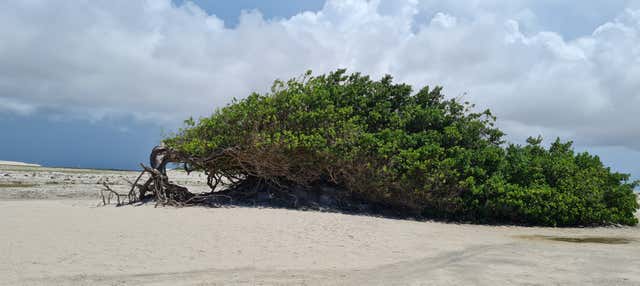
On this tour around the east of Jericoacoara, you'll discover the sloth tree, Paradise Lagoon, and the Blue Lagoon. You'll see pristine beach landscapes!
Jericoacoara calls for 4 to 5 days: for the lagoons, a trip through the dunes, several sunsets and some rest. The driest and windiest months run from July to December, with highs of 32 to 33 °C and 2 to 25 mm of rain per month; the rainy season runs from February to May.
Jericoacoara has no pavement. The streets are packed sand, the center lies inside Jericoacoara National Park and the whole village fits in a few blocks between the sea and the dunes. Until the 1980s it was an almost isolated fishing village, without electricity. Today it still has no tall buildings and keeps that end-of-the-world feel that made it famous.
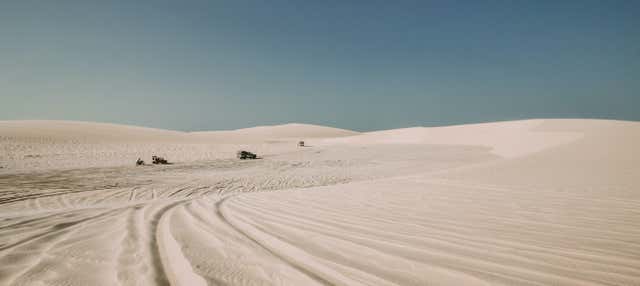
It belongs to the municipality of Jijoca de Jericoacoara, at the far western end of the Ceará coast, about 300 km from Fortaleza. The final stretch of the trip is the surprising part: past Jijoca, the sand track can only be done by 4x4 or on local transport. That sand stretch is part of the charm, because it helps keep the village as it is.
The climate is warm all year, with almost guaranteed sun in the second half of the year and strong winds that make Jeri (the local nickname) one of the most sought-after kitesurfing destinations in the world between July and December. The rain is concentrated from February to May. Visitors come for three things: the swimming-pool-blue freshwater lagoons, the dunes and the sunset ritual, when the whole village climbs the Sunset Dune to applaud the sun sinking into the sea.
Updated on October 13, 2026
A tall dune on the edge of the village where every late afternoon a crowd gathers to watch the sun sink into the sea. It is the day's essential meeting point.
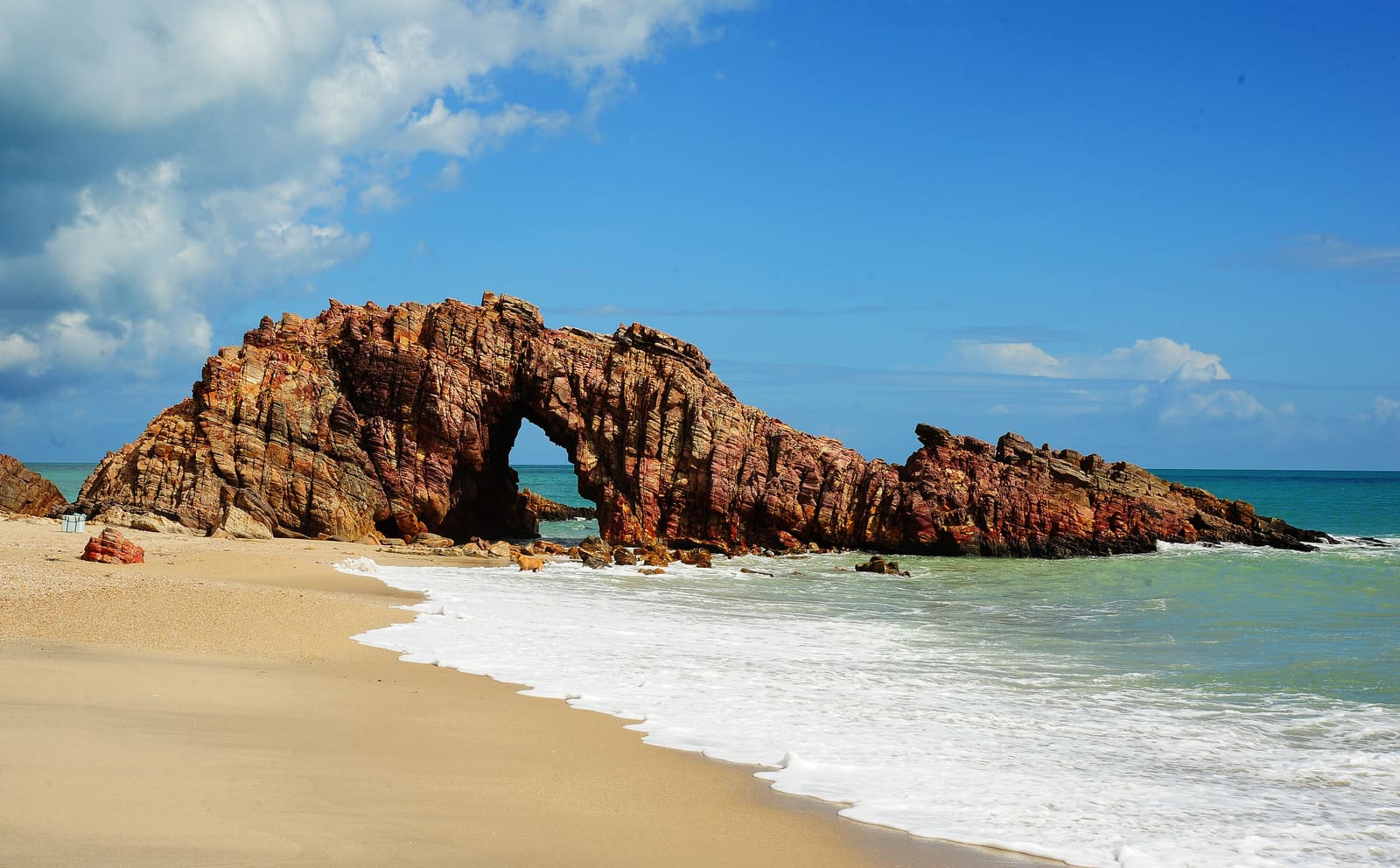
A stone arch carved by the sea and a symbol of Jeri. You reach it on foot or by buggy at low tide, and the natural frame makes the best photos in the area.
A freshwater lagoon the color of a swimming pool, with hammocks in the water and bars with feet in the sand. It is the postcard image of Jeri's lagoons.
A mirror of translucent water that changes shade with the level of the rains. Quieter and more photogenic, very good for swimming.
A carnauba palm leaning over the sand of the beach that has become an icon of Jeri. It gives the classic photos, especially in the golden light of late afternoon.
The strong winds from July to December make Jericoacoara one of the most sought-after kitesurfing destinations on the planet. The village has schools and equipment rental.
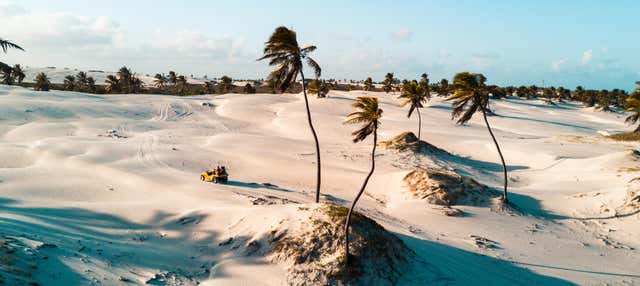
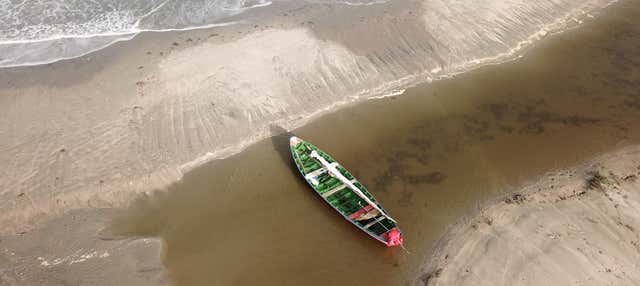
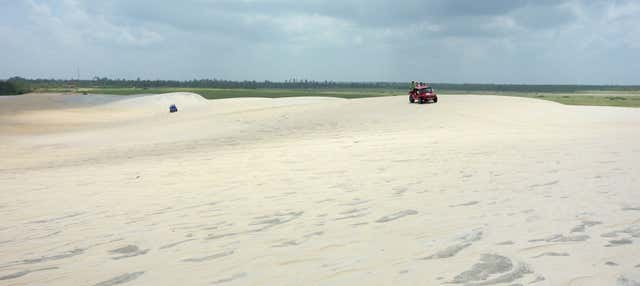
Nearly deserted beaches around Jeri, usually visited by buggy among dunes and lagoons. It is the classic way to see the surroundings.
Brazil is in the Southern Hemisphere, so the seasons are the reverse of those in Europe and North America, although in Jericoacoara you hardly notice: it is hot all year, with highs of 31 to 33 °C and lows of 22 to 24 °C. What changes is the rain.
The best window runs from July to December: it is the driest period, with almost guaranteed sun and strong winds, ideal for kitesurfing. July records 25 mm over 4 days, August 5 mm over 1 day, and September and October barely 2 mm over 1 day each; November has 3 mm and December 15 mm over 2 days.
The rainy season runs from February to May. March (321 mm over 19 days) and April (309 mm over 19 days) are the wettest months; February adds up to 173 mm over 13 days and May 142 mm over 12 days. In return, the lagoons are fuller, although there is more cloud cover.
| Month | High | Low | Rain | Rainy days | Rating |
|---|---|---|---|---|---|
| January | 32 °C | 23 °C | 114 mm | 9 | Fair |
| February | 31 °C | 23 °C | 173 mm | 13 | Not recommended |
| March | 31 °C | 23 °C | 321 mm | 19 | Not recommended |
| April | 31 °C | 23 °C | 309 mm | 19 | Not recommended |
| May | 31 °C | 23 °C | 142 mm | 12 | Not recommended |
| June | 32 °C | 22 °C | 65 mm | 7 | Fair |
| July | 32 °C | 22 °C | 25 mm | 4 | Good |
| August | 33 °C | 22 °C | 5 mm | 1 | Very good |
| September | 33 °C | 23 °C | 2 mm | 1 | Very good |
| October | 33 °C | 23 °C | 2 mm | 1 | Very good |
| November | 33 °C | 23 °C | 3 mm | 1 | Very good |
| December | 33 °C | 24 °C | 15 mm | 2 | Good |
Monthly averages for 1991-2020 from INMET (Brazil's National Institute of Meteorology). The rating combines rainfall, temperature and humidity.
In summer (December to February), Jericoacoara has highs of around 32 °C (90 °F) and lows of 23 °C (73 °F), and it is the wetter season, with about 101 mm of rain spread over about 8 days a month. The days are hot and call for beach time and shade.
In fall (March to May), Jericoacoara has highs of around 31 °C (88 °F) and lows of 23 °C (73 °F), and it is the wetter season, with about 257 mm of rain spread over about 17 days a month. The days are hot and call for beach time and shade.
In winter (June to August), Jericoacoara has highs of around 32 °C (90 °F) and lows of 22 °C (72 °F), and it is the driest time of year, with about 32 mm of rain a month. The days are hot and call for beach time and shade.
In spring (September to November), Jericoacoara has highs of around 33 °C (91 °F) and lows of 23 °C (73 °F), and it is the driest time of year, with about 2 mm of rain a month. The days are hot and call for beach time and shade.
Weather, crowds, prices and what is happening at the destination in each period. Tap a month to open its full page; the colored dot shows how good the time is for a visit.
New Year's Eve with parties in the village and in Jijoca, including music festivals that fill the high season.
Recurring annual events: exact dates change every year, so confirm them before you plan your trip.
The nearest airport is Jericoacoara Regional Airport (JJD), about 33 km from the village. The ride to the village is done by 4x4 and part of the way is a sand track inside the National Park.
Another option is to fly into Fortaleza and continue by land: it is about 300 km to Jijoca de Jericoacoara, around 5 hours. The pavement ends at Jijoca, and the last sand stretch to the village can only be done by 4x4 or on local transport. Ordinary cars do not run inside the village, so you get around on foot.
The whole village fits in a few blocks between the sea and the dunes, and ordinary cars do not run there, so the most practical choice is to stay inside it, where almost everything is within walking distance: the sand streets, the beach and the path to the Sunset Dune. Because it is inside the National Park, there are rules to protect the dunes and the lighting is kept low.
Rates change with the dates: confirm the price on Booking.com.
From July to December: it is the driest period (2 to 25 mm of rain per month), with almost guaranteed sun and strong winds, ideal for kitesurfing. The rainy season runs from February to May, with fuller lagoons but more cloud cover.
Four to five days is ideal to enjoy the lagoons, take a buggy trip through the dunes, watch several sunsets and rest without rushing.
Not all the way to the village. The pavement goes as far as Jijoca de Jericoacoara, and from there the sand track can only be done by 4x4 or on local transport. Ordinary cars do not run inside the village.
Jericoacoara Regional Airport (JJD) is about 33 km from the village. The ride is done by 4x4 and part of the way is a sand track inside the National Park.
Access to the area is free, but the bars and facilities inside the lagoons (hammocks, tables, loungers) usually charge a minimum spend. Paradise Lagoon and Blue Lagoon have organized bars.
Between July and December the winds blow strong and steady along the coast, creating very good conditions for kiting. That put Jeri on the world map of the sport, with schools and facilities for practicing it.
The weather and population data in this guide come from official agencies and open databases. Entry requirements and health recommendations change: always check the official source linked.