9.1· 72 reviews
Campos do Jordão Sightseeing Tour
This panoramic tour of Campos do Jordão will take us to see the main sights of this city in the state of São Paulo. A comfortable and fun way to tour the town.
3 h
from US$ 20
Campos do Jordão calls for 3 to 4 days to explore the Capivari district, the parks, the viewpoints and the mountain food without rushing. The window with the best weather runs from June to September, with August as the best month: 38 mm of rain over 4 days, highs of 18 to 20 °C and lows of 5 to 8 °C. Summer is warmer (a high of 23 °C in January) but very rainy (253 mm over 21 days in January), with afternoons wrapped in mist.
Campos do Jordão began as a climate resort: in the early 20th century, doctors recommended the pure, dry air of the Mantiqueira for treating tuberculosis, and the town grew around sanatoriums and the railway that climbed the mountains. That therapeutic past shaped its tourist appeal: what was once a refuge for the sick became a refuge for anyone escaping the heat. The municipal seat, at 1,628 meters above sea level, is the highest in Brazil, and the town proudly wears the nickname "Brazilian Switzerland," reinforced by architecture that imitates Alpine chalets.
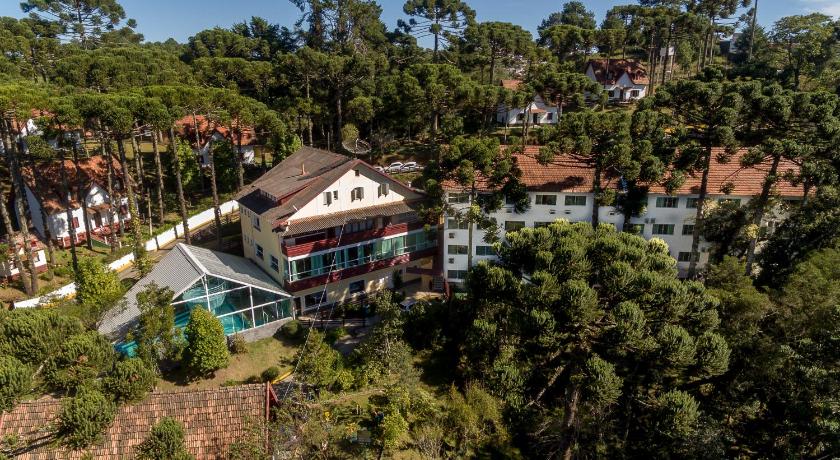
The altitude explains almost everything: the climate is the coldest among the cities of the Southeast, with lows near 5 °C in winter and records of frost and, rarely, snow. Summer is rainy and mild, with afternoons wrapped in the mist that rises from the araucaria forest. It is one of the few places in Brazil where a heavy coat makes sense at night all year round, and where the pinhão (the seed of the araucaria, or Brazilian pine) becomes a typical winter dish, roasted or boiled at stands around town.
The high point is the Campos do Jordão Winter Festival, held in July since 1970: it is the oldest and most important classical music festival in Latin America, with concerts at the Auditório Claudio Santoro, in the Capivari district. Outside the festival, a visit mixes Capivari, with its chocolate shops and breweries, the Morro do Elefante cable car, the Campos do Jordão State Park (Horto Florestal), with trails among araucarias, and Pico do Itapeva, from where you can see the Paraíba valley far below.
Updated on October 19, 2026
A reserve with araucaria forest, trails, a river and waterfalls; a refuge for wildlife such as the capuchin monkey and for birds of the high-altitude Atlantic Forest.
A viewpoint reachable by cable car or on foot, with sweeping views of the valley and the town; one of the classic postcard scenes.
At about 2,030 m, it offers one of the highest views in the Southeast, with the Paraíba valley and, on clear days, peaks of the Mantiqueira.
The central district, with chalet architecture, chocolate shops, breweries, fondue restaurants and the Capivari lake for pedal-boat rides.
Home of the Winter Festival since 1970, the oldest classical music festival in Latin America, held every July.
The official winter residence of the governor of São Paulo, with a collection of Brazilian art and gardens; open to visits during part of the year.
Brazil is in the Southern Hemisphere, so the seasons are the reverse of those in Europe and North America: winter in Campos do Jordão falls between June and August and summer between December and March. Because of the altitude, the climate is the coolest in the Southeast: in January and February, the warmest months, the average high is only 23 °C and the low is 14 °C. In June and July, the coldest, the high is 18 °C and the low is 5 °C.
The driest months are June and August, with 38 mm of rain over 4 days each, and July, with 46 mm over 4 days. The wettest are January (253 mm over 21 days), December (240 mm over 19 days) and February (206 mm over 16 days): in summer there are many rainy days, with overcast afternoons.
With those numbers, the best window to visit runs from June to September, with August as the best month. July is the high season, with intense cold and the Winter Festival, but also the busiest and most expensive month; May, June and August are cold without the same crowds. Real snow is extremely rare; what happens often is frost. These are multi-year averages, not a guarantee for your dates.
| Month | High | Low | Rain | Rainy days | Rating |
|---|---|---|---|---|---|
| January | 23 °C | 14 °C | 253 mm | 21 | Fair |
| February | 23 °C | 14 °C | 206 mm | 16 | Fair |
| March | 22 °C | 13 °C | 197 mm | 17 | Not recommended |
| April | 21 °C | 11 °C | 86 mm | 9 | Fair |
| May | 19 °C | 8 °C | 83 mm | 7 | Fair |
| June | 18 °C | 5 °C | 38 mm | 4 | Good |
| July | 18 °C | 5 °C | 46 mm | 4 | Good |
| August | 20 °C | 5 °C | 38 mm | 4 | Good |
| September | 20 °C | 8 °C | 86 mm | 8 | Good |
| October | 21 °C | 10 °C | 133 mm | 12 | Fair |
| November | 22 °C | 12 °C | 161 mm | 14 | Fair |
| December | 22 °C | 13 °C | 240 mm | 19 | Fair |
Monthly averages for 1991-2020 from INMET (Brazil's National Institute of Meteorology). The rating combines rainfall, temperature and humidity.
In summer (December to February), Campos do Jordão has highs of around 23 °C (73 °F) and lows of 14 °C (57 °F), and it is the wetter season, with about 233 mm of rain spread over about 19 days a month. The weather is milder, good for walking and exploring without the summer heat.
In fall (March to May), Campos do Jordão has highs of around 21 °C (70 °F) and lows of 11 °C (52 °F), and it is the wetter season, with about 122 mm of rain spread over about 11 days a month. The weather is milder, good for walking and exploring without the summer heat.
In winter (June to August), Campos do Jordão has highs of around 19 °C (66 °F) and lows of 5 °C (41 °F), and it is the driest time of year, with about 41 mm of rain a month. The weather is milder, good for walking and exploring without the summer heat.
In spring (September to November), Campos do Jordão has highs of around 21 °C (70 °F) and lows of 10 °C (50 °F), and it is the wetter season, with about 127 mm of rain spread over about 11 days a month. The weather is milder, good for walking and exploring without the summer heat.
Weather, crowds, prices and what is happening at the destination in each period. Tap a month to open its full page; the colored dot shows how good the time is for a visit.
A classical music festival held in winter, with dozens of concerts, considered the most traditional of its kind in Latin America.
Viewing of the cherry trees in bloom at the Parque da Cerejeira, with Japanese culture and food, inspired by hanami.
Recurring annual events: exact dates change every year, so confirm them before you plan your trip.
The nearest commercial airport is São José dos Campos (SJK), about 80 km away, with regular flights resumed in 2024 but still limited. Guarulhos International Airport (GRU) is farther, about 150 km away, and usually has more options.
From São Paulo, the overland route is 170 km along the Carvalho Pinto highway and the SP-123, about 2 h 45 min climbing the mountains, with a winding final stretch. From Rio de Janeiro it is 334 km, about 4 h 40 min. The climb and the viewpoints are often covered in dense mist in the late afternoon: it is best to drive slowly and with low beams.
Routes and airlines change often; the safest approach is to check them when planning your trip.
Vila do Capivari is the central district, with chalet architecture, chocolate shops, breweries and restaurants. The other attractions (parks, viewpoints) are spread out and public transportation is limited, so a car gives you much more flexibility. It is possible to do a day trip from São Paulo, but the mountain road is tiring. The ideal is to sleep at least one night to enjoy the cold and the town's atmosphere at night.
Rates change with the dates: confirm the price on Booking.com.
Yes, its municipal seat is at 1,628 meters above sea level, the highest among the municipal seats in the country. Spots in the region, such as Pico do Itapeva, exceed 2,000 meters.
Real snow is extremely rare and almost never happens; what is common in winter is frost and temperatures near 0 °C on the coldest early mornings. Don't count on snow.
June to September is the window with the best weather, with August as the best month (38 mm of rain over 4 days). Winter, from June to August, is the high season, with intense cold and the Winter Festival in July. If you want cold without the crowds and the higher prices of July, June and August outside the festival are great options.
Three to four days are enough to see Capivari, the parks and the viewpoints, and there is still time left for the mountain food without rushing.
It is possible, about 2 h 45 min by car, but the mountain road is tiring. The ideal is to sleep at least one night to enjoy the cold and the town's atmosphere at night.
Yes, it is recommended. The attractions are spread out (parks, viewpoints and Capivari) and public transportation is limited; with a car the visit is much more flexible.
The weather and population data in this guide come from official agencies and open databases. Entry requirements and health recommendations change: always check the official source linked.