9.9· 18 reviews
Fernando de Noronha Island Tour
Visit the best of Fernando de Noronha on this comprehensive tour of the island's main beaches, natural monuments, and viewpoints.
8 h
from US$ 68
Fernando de Noronha calls for 4 to 5 days to see the main beaches, go on a dive and leave some slack for the weather; with less time, key spots tend to get skipped. The best weather runs from September to December: November is the driest month (9 mm of rain over 2 days), with highs of 29 to 31 °C. From March to June it rains far more, with 243 mm in April spread over 16 days.
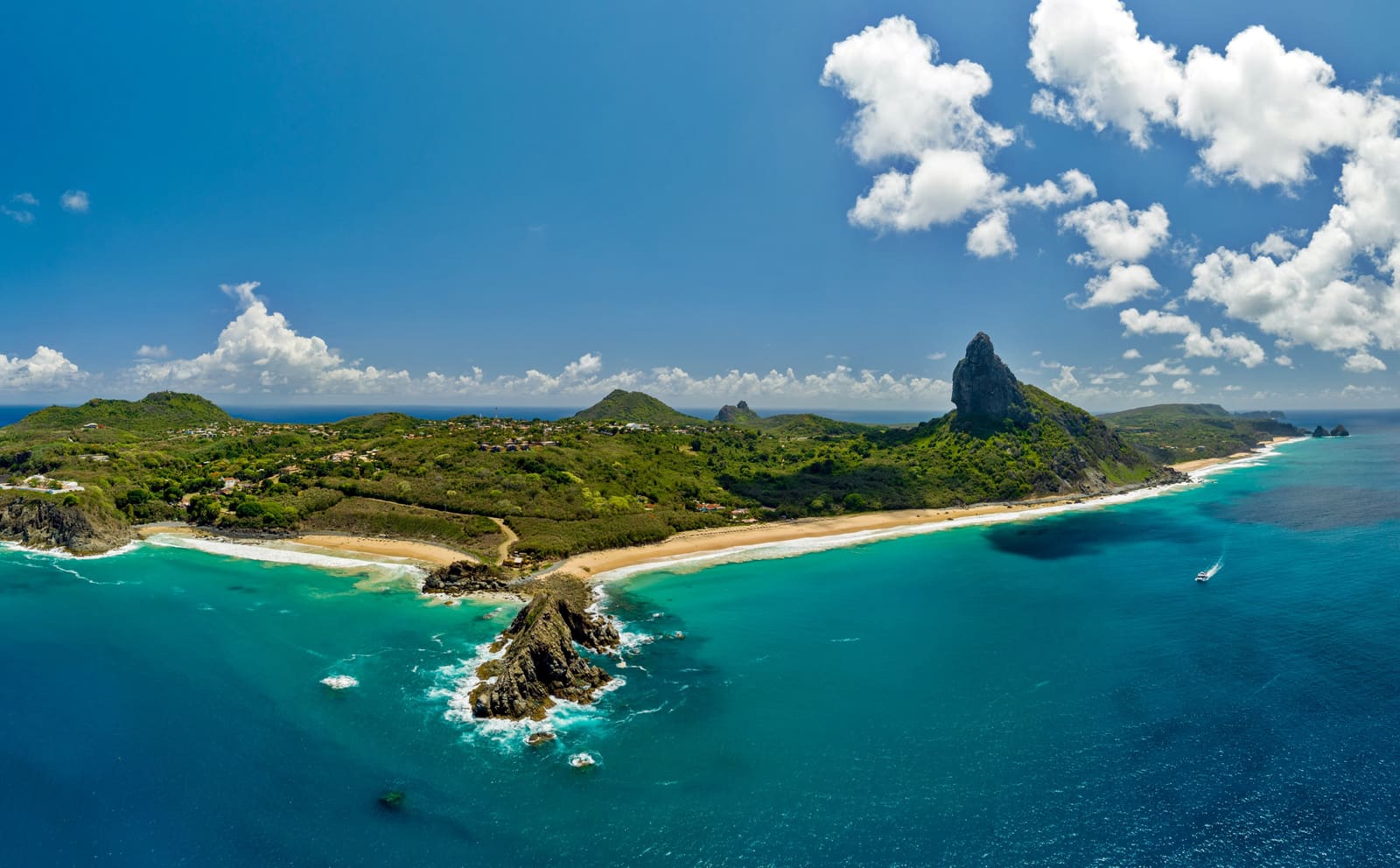
Fernando de Noronha is a volcanic archipelago of 21 islands about 350 km off the coast of Pernambuco, of which only the main island is inhabited. It rose from underwater eruptions millions of years ago and is now a UNESCO Natural World Heritage Site, split between the Marine National Park, managed by ICMBio (Brazil's federal conservation agency), and the Environmental Protection Area. It is a State District of Pernambuco, with a little over three thousand permanent residents.
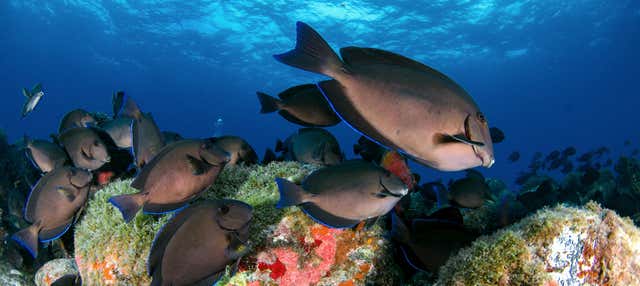
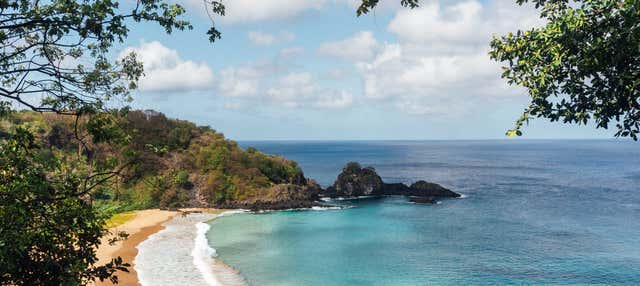
The sea is the star. The warm, clear waters are home to turtles, spinner dolphins that enter Baía dos Golfinhos (Dolphin Bay) every day, sharks and a marine life that makes Noronha one of the best diving spots in Brazil. Baía do Sancho, wedged into a wall of cliffs that you reach by climbing down iron ladders, has been voted the best beach in the world several times in the Tripadvisor ranking.
Visiting Noronha takes planning: the only way in is by plane, there is a daily cap on visitors, and you pay the Environmental Preservation Fee (TPA), which is proportional to the number of days you stay, plus entry to the Marine National Park run by ICMBio. It is an expensive, tightly regulated destination precisely so that it stays intact, and visitors quickly understand why so much care is needed.
Updated on October 19, 2026
Voted the best beach in the world several times by Tripadvisor. It is wedged into a wall of cliffs and reached by narrow iron ladders fixed to the rock.
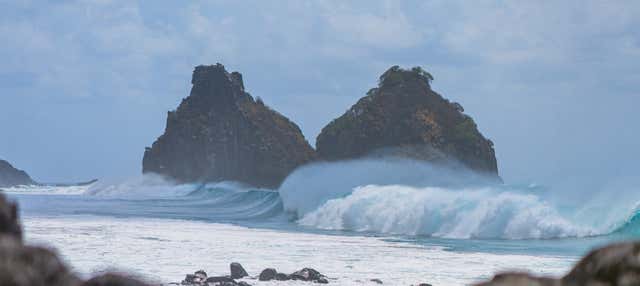
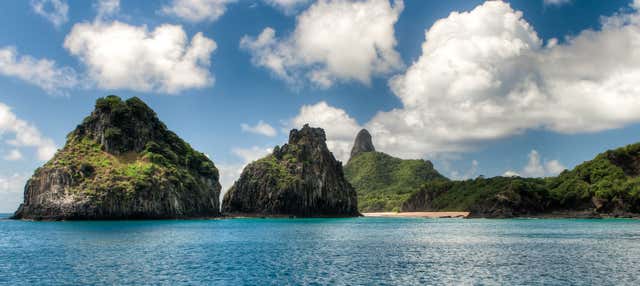
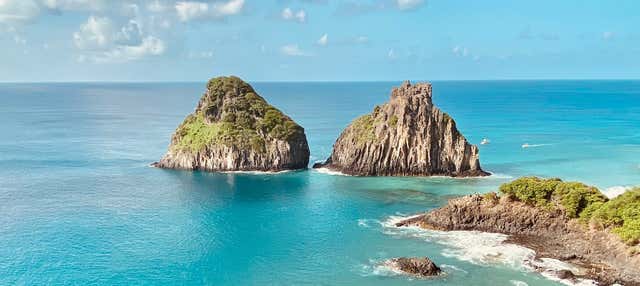
A small cove of natural pools with a view of Morro Dois Irmãos (Two Brothers Hill), one of the archipelago's postcard scenes. Excellent for snorkeling at low tide.
The largest beach on the island and the main nesting site for sea turtles. The sea is more open and rough, and the beach is surrounded by cliffs with almost no facilities.
A high point with a view of Baía dos Porcos and the twin hills that have become the symbol of Noronha. One of the best places to watch the sunset.
Base of the sea turtle conservation project, with a visitor center and talks at dusk about the local marine life.
Considered one of the best dive sites in Brazil, with warm water and high visibility. Shipwrecks, sharks, turtles and schools of fish at spots such as Pedra do Frade.
A cove where spinner dolphins come in almost every morning to rest. You can watch them from the viewpoint, inside the Marine National Park.
Brazil is in the Southern Hemisphere, so the seasons are the reverse of those in Europe and North America: summer in Noronha falls between December and March and winter between June and September. The temperature hardly changes over the year: highs range from 29 to 31 °C and lows from 24 to 26 °C. The highest highs (31 °C) occur in February, March and December; the lowest (29 °C), from July to September.
The difference is in the rain. November is the driest month, with 9 mm over 2 days, followed by October (10 mm over 3 days) and December (10 mm over 2 days). The wettest are April (243 mm over 16 days), May (206 mm over 14 days) and June (206 mm over 13 days).
The dry season, from August to December, brings a calmer sea and better visibility for diving; within it, the best weather runs from September to December, with November as the best month. Between March and June rain is frequent. These are multi-year averages, not a guarantee for your dates.
| Month | High | Low | Rain | Rainy days | Rating |
|---|---|---|---|---|---|
| January | 30 °C | 25 °C | 67 mm | 5 | Good |
| February | 31 °C | 25 °C | 77 mm | 7 | Good |
| March | 31 °C | 25 °C | 166 mm | 14 | Not recommended |
| April | 30 °C | 25 °C | 243 mm | 16 | Not recommended |
| May | 30 °C | 25 °C | 206 mm | 14 | Not recommended |
| June | 30 °C | 25 °C | 206 mm | 13 | Not recommended |
| July | 29 °C | 24 °C | 179 mm | 13 | Fair |
| August | 29 °C | 24 °C | 61 mm | 11 | Fair |
| September | 29 °C | 25 °C | 26 mm | 6 | Good |
| October | 30 °C | 25 °C | 10 mm | 3 | Very good |
| November | 30 °C | 25 °C | 9 mm | 2 | Very good |
| December | 31 °C | 26 °C | 10 mm | 2 | Very good |
Monthly averages for 1991-2020 from INMET (Brazil's National Institute of Meteorology). The rating combines rainfall, temperature and humidity.
In summer (December to February), Fernando de Noronha has highs of around 31 °C (88 °F) and lows of 25 °C (77 °F), and it is the driest time of year, with about 51 mm of rain a month. The days are hot and call for beach time and shade.
In fall (March to May), Fernando de Noronha has highs of around 30 °C (86 °F) and lows of 25 °C (77 °F), and it is the wetter season, with about 205 mm of rain spread over about 15 days a month. The days are hot and call for beach time and shade.
In winter (June to August), Fernando de Noronha has highs of around 29 °C (84 °F) and lows of 24 °C (75 °F), and it is the wetter season, with about 149 mm of rain spread over about 12 days a month. The days are hot and call for beach time and shade.
In spring (September to November), Fernando de Noronha has highs of around 30 °C (86 °F) and lows of 25 °C (77 °F), and it is the driest time of year, with about 15 mm of rain a month. The days are hot and call for beach time and shade.
Weather, crowds, prices and what is happening at the destination in each period. Tap a month to open its full page; the colored dot shows how good the time is for a visit.
A festival for the patron saint of fishermen, a public holiday on the island on June 29, with Mass, a boat procession and concerts.
The island's June festivities around June 23 and 24, with forró (northeastern dance music), traditional foods and cultural performances.
Year-end celebrations on the island, with midnight parties and the traditional Réveillon do Zé Maria.
Recurring annual events: exact dates change every year, so confirm them before you plan your trip.
Fernando de Noronha can only be reached by plane. The archipelago has its own airport, Fernando de Noronha Airport (Governador Carlos Wilson), with the code FEN, on the island itself.
There are direct flights from Recife (PE) and Natal (RN); there is no road access and no regular ferry. The Environmental Preservation Fee and the Marine National Park entry fee are paid online before you travel.
Routes and airlines change often; the safest approach is to check them when you plan your trip.
Only the main island is inhabited and distances are short, so it helps to choose a place to stay near the beaches or the spots you most want to visit. To get around, you can rent buggies, take taxis or ride a bus line that crosses the island along the BR-363. Because there is a daily cap on visitors, it is best to book ahead.
Rates change with the dates: confirm the price on Booking.com.
From August to December, the dry season, when it rains little, the sea is clear and diving visibility is best. The best weather runs from September to December, and November is the driest month (9 mm). Between March and June rain is frequent: 243 mm in April.
Yes. There is the Environmental Preservation Fee (TPA), charged per day of stay, and the entry fee for the Marine National Park, run by ICMBio, which you need to reach beaches such as Sancho, Porcos and Leão. They are paid separately, and it is best to pay online in advance.
By plane only. There are direct flights from Recife and Natal. There is no road, bridge or regular passenger ferry access.
It was voted the best beach in the world several times in Tripadvisor's annual ranking, including the 2023 edition. It is reached by iron ladders between the cliffs, which keeps crowds away and preserves the landscape.
Four to five days is ideal to see the main beaches, go on a dive and leave some slack for the weather. With less time, key spots tend to get skipped.
Yes. Spinner dolphins come into Baía dos Golfinhos almost every morning to rest. You can watch them from the viewpoint, and the bay area is protected, with no swimming allowed.
The weather and population data in this guide come from official agencies and open databases. Entry requirements and health recommendations change: always check the official source linked.