
10· 6 reviews
Ilhas Botinas Boat Trip + Angra dos Reis Beaches
Discover some of the natural wonders of the state of Rio de Janeiro on this boat trip around the Ilhas Botinas & the beaches of Angra dos Reis.
5 h
from US$ 35
Angra dos Reis is worth 3 to 4 days: one full day on a schooner or motorboat around the bay, another for a round trip to Ilha Grande and a third for Ilha da Gipóia and the Lagoa Azul. The best window runs from May to August, with highs of 26 to 27 °C and 41 to 62 mm of rain a month; summer, from December to March, reaches 32 °C and is much rainier and more crowded.
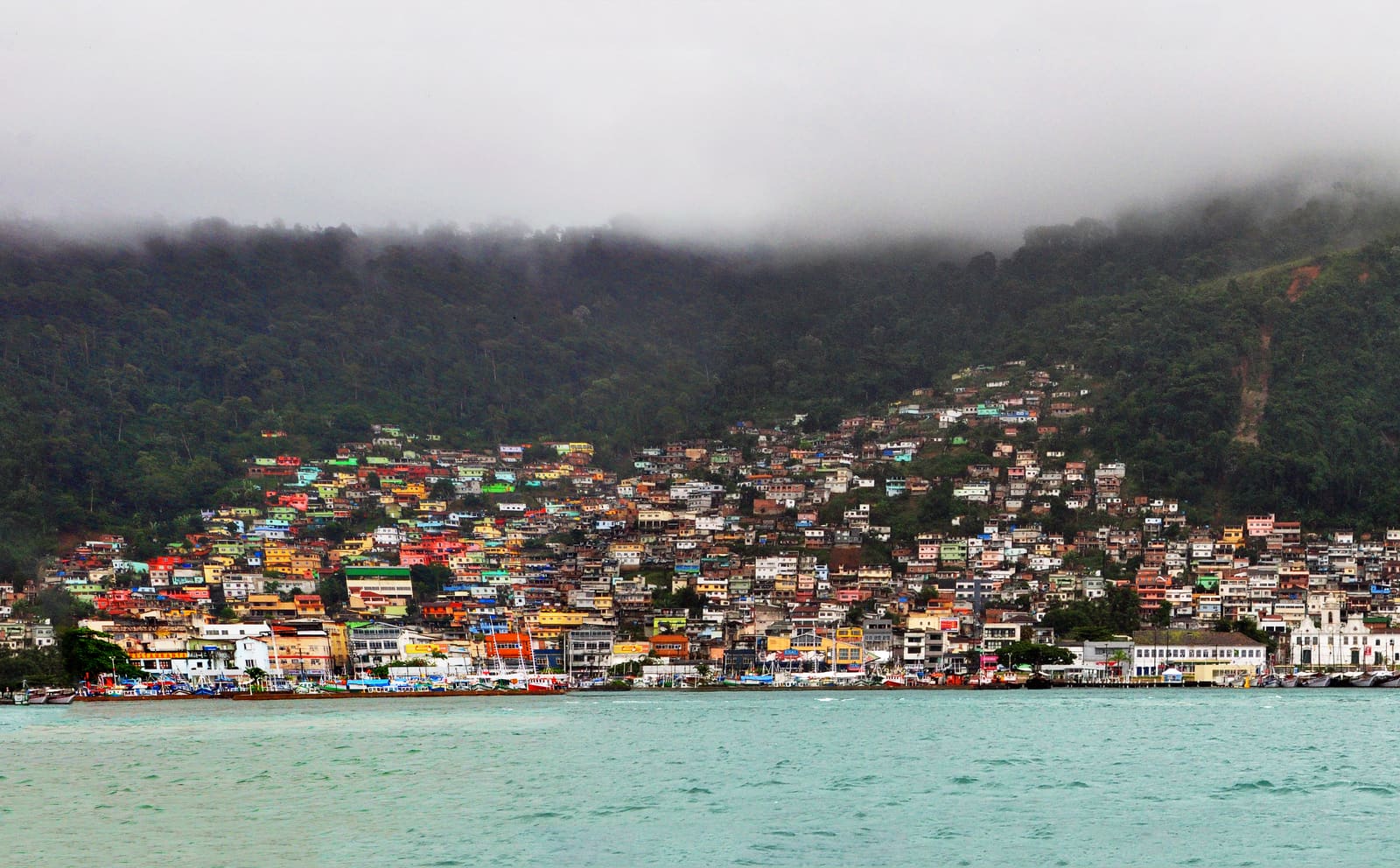
Angra dos Reis is a genuinely big city, with a shipyard, a port and even a nuclear power plant nearby; it has none of the fishing-village feel you might imagine before arriving. What matters to a traveler is on the water: Ilha Grande Bay, dotted with more than 360 islands, islets and rock outcrops, opens up right past downtown, and that is where the schooners leaving the pier all day are headed.
Boat trips are the reason the city is on the tourist itinerary. Schooners with a set route stop at beaches such as Lagoa Azul and Dentista Beach, on Ilha da Gipóia, with breaks to swim in clear, warm water; if you prefer to set your own pace, you can hire a motorboat with a skipper and plan the trip as you like. The green of the forest that covers nearly every island contrasts with the blue-green sea, and a good part of the charm is watching the scenery drift by from the bow.
Angra is also the most-used gateway to Ilha Grande: fast boats and ferries leave from here and reach Vila do Abraão in under an hour, which makes the city both a destination and a starting point. You can stay downtown and take a different day trip each day, or use Angra only as a stopover before continuing to the island. Either way, the plan changes little: head out by boat in the morning, come back sun-tanned in the afternoon.
Updated on October 19, 2026
The classic Angra outing: the schooner leaves the pier in the morning and stops at three or four beaches and coves in the bay over the day, with free time to swim at each stop.
A fast boat or ferry takes you to Vila do Abraão in under an hour. You can stroll around the village, take a boat to a nearby beach and return the same day.
One of the most photographed beaches in Brazil, on Ilha Grande. You reach it only by boat followed by a short walk, or by a longer trail from Abraão: it is a full-day outing from Angra.
The most visited island near downtown Angra, with several calm-water beaches side by side, floating restaurants and easy access by motorboat.
A narrow strip of sand on Ilha da Gipóia, wedged between rock outcrops, with one of the clearest seas in the region. It is a nearly obligatory stop on schooner trips.
A natural pool among islets, with turquoise water and good visibility for snorkeling. It is on the route of almost every boat trip leaving Angra.
The starting point of the schooners and also where the oldest buildings in the city stand, facing the bay. A good place for a walk at sunset, before or after a day on the water.
An 18th-century church and convent in downtown Angra, one of the few examples of colonial architecture left in the city. It is a quick visit, on foot from the pier.
Brazil is in the Southern Hemisphere, so the seasons run opposite to those in Europe and North America: summer in Angra dos Reis falls between December and March and winter between June and August. Summer is hot, with highs of 30 to 32 °C (February is the hottest month, at 32 °C), and winter is mild: in June, the coolest month, the average high is 26 °C and the low is 18 °C.
It rains all year, but with a big difference between seasons. The driest months are July (41 mm over 6 days), August (43 mm over 6 days) and June (45 mm over 6 days). The wettest are January (190 mm over 18 days), December (180 mm over 17 days) and February (168 mm over 15 days).
For boat trips with little rain, the best window runs from May to August, with July the best month. It is a guide based on historical averages and does not guarantee the weather on any given day. Summer is high season, with the bay full of boats and the highest prices.
| Month | High | Low | Rain | Rainy days | Rating |
|---|---|---|---|---|---|
| January | 31 °C | 24 °C | 190 mm | 18 | Not recommended |
| February | 32 °C | 24 °C | 168 mm | 15 | Not recommended |
| March | 31 °C | 23 °C | 150 mm | 15 | Not recommended |
| April | 29 °C | 22 °C | 98 mm | 11 | Fair |
| May | 27 °C | 20 °C | 62 mm | 8 | Good |
| June | 26 °C | 18 °C | 45 mm | 6 | Good |
| July | 26 °C | 18 °C | 41 mm | 6 | Good |
| August | 27 °C | 18 °C | 43 mm | 6 | Good |
| September | 27 °C | 19 °C | 75 mm | 10 | Good |
| October | 28 °C | 21 °C | 105 mm | 13 | Fair |
| November | 29 °C | 22 °C | 148 mm | 15 | Fair |
| December | 30 °C | 23 °C | 180 mm | 17 | Not recommended |
Monthly averages for 1991-2020 from INMET (Brazil's National Institute of Meteorology). The rating combines rainfall, temperature and humidity.
In summer (December to February), Angra dos Reis has highs of around 31 °C (88 °F) and lows of 24 °C (75 °F), and it is the wetter season, with about 179 mm of rain spread over about 17 days a month. The days are hot and call for beach time and shade.
In fall (March to May), Angra dos Reis has highs of around 29 °C (84 °F) and lows of 22 °C (72 °F), and it is the wetter season, with about 103 mm of rain spread over about 11 days a month. The days are hot and call for beach time and shade.
In winter (June to August), Angra dos Reis has highs of around 26 °C (79 °F) and lows of 18 °C (64 °F), and it is the driest time of year, with about 43 mm of rain a month. Temperatures are pleasant for sightseeing all day.
In spring (September to November), Angra dos Reis has highs of around 28 °C (82 °F) and lows of 21 °C (70 °F), and it is the wetter season, with about 109 mm of rain spread over about 13 days a month. The days are hot and call for beach time and shade.
Weather, crowds, prices and what is happening at the destination in each period. Tap a month to open its full page; the colored dot shows how good the time is for a visit.
A tradition of Portuguese origin dating from the 18th century, with a novena (nine days of prayer), a procession and folk dances such as the marujos and jardineiras.
The city's patron saint, celebrated on December 8 with a sea procession of decorated boats across Ilha Grande Bay.
New Year's Eve is celebrated on the waterfront and on boats anchored in the bay, with fireworks seen from the water.
Recurring annual events: exact dates change every year, so confirm them before you plan your trip.
There is no commercial airport in Angra dos Reis. The most-used one is Tom Jobim International Airport, known as Galeão (GIG), in the city of Rio de Janeiro, about 150 km away. Rio's other airport, Santos Dumont (SDU), is also used to get here.
The final stretch is by land, along the BR-101 highway (Rio-Santos). From Rio de Janeiro it is 152 km (about 2 h 30 min), from Paraty 96 km (about 1 h 36 min) and from São Paulo 384 km (about 5 h 30 min). There are also buses from Rio and São Paulo to the city's bus station.
Routes and airlines change often; the safest approach is to check them when planning your trip.
You can stay downtown in Angra and take a different round trip each day, since Santa Luzia Pier, where the schooners and the boats to Ilha Grande depart, is in the central area. Another option is to use Angra only as a stopover and continue to Ilha Grande to spend your nights there. In summer, at New Year and during Carnival, prices at pousadas (small inns) rise sharply and the bay fills with boats. Outside high season the city is quieter and the sea is calmer for boat trips.
Rates change with the dates: confirm the price on Booking.com.
From June to August the sea is calmer and it rains much less: July has about 41 mm and 6 days of rain in the month, against almost 190 mm in January. Summer, from December to March, is hot and is high season, with the bay full of boats and higher prices.
Three to four days are enough for the essentials: a full day on a schooner or motorboat around the bay, a round-trip excursion to Ilha Grande and a third day for Ilha da Gipóia and the Lagoa Azul. With 4 days you have plenty of time to rest or return to the beach you liked most.
Angra is on the BR-101, the Rio-Santos highway, about 150 km from Rio de Janeiro (2 h 30 min) and 380 km from São Paulo (5 h 30 min). There are also buses from both cities. There is no commercial airport in Angra: the most-used one is in Rio de Janeiro.
Yes, and it is one of the most direct ways to get there. Boats and ferries leave from Santa Luzia Pier, downtown, for Vila do Abraão, with a crossing of up to an hour. You can make a round-trip excursion or continue with luggage to sleep on the island.
It depends a lot on the season. In summer and on public holidays, pousadas and boat trips cost more; outside high season prices drop. To save money, choose a schooner with a shared route instead of a private motorboat, which costs considerably more.
It rains all year, but with a big difference between seasons. December and January record 180 to 190 mm; June and July, 41 to 45 mm, with a calmer sea for boat trips.
The weather and population data in this guide come from official agencies and open databases. Entry requirements and health recommendations change: always check the official source linked.


