
9.1· 15 reviews
Maria Fumaça Train Ride & Garibaldi Winery Tour
On this ride on the Maria Fumaça train we'll enjoy unique experience accompanied by dance, music and wine. We'll also visit the Garibaldi wine cooperative
5 h
from US$ 98
Bento Gonçalves is worth 2 to 3 days to tour the Vale dos Vinhedos at a relaxed pace, visit a few wineries, ride the Maria Fumaça train and stop by the Caminhos de Pedra. There is no dry season: it rains all year, with 98.5 to 203.5 mm a month, and the best window by weather runs from August to December, with highs of 22 to 28 °C. The grape harvest, from January to March, and the golden autumn, from April to May, are the other great reasons to go.
Bento Gonçalves began as a colonial settlement in 1875, when families of Italian immigrants, mostly from Veneto, began climbing into the Serra Gaúcha in search of land to farm. Named in honor of Bento Gonçalves da Silva, leader of the Farroupilha Revolution, the colony became a municipality on October 11, 1890, and spent the following century turning subsistence vineyards into a wine industry. That is where the nickname the city still carries comes from: the capital of Brazilian wine.
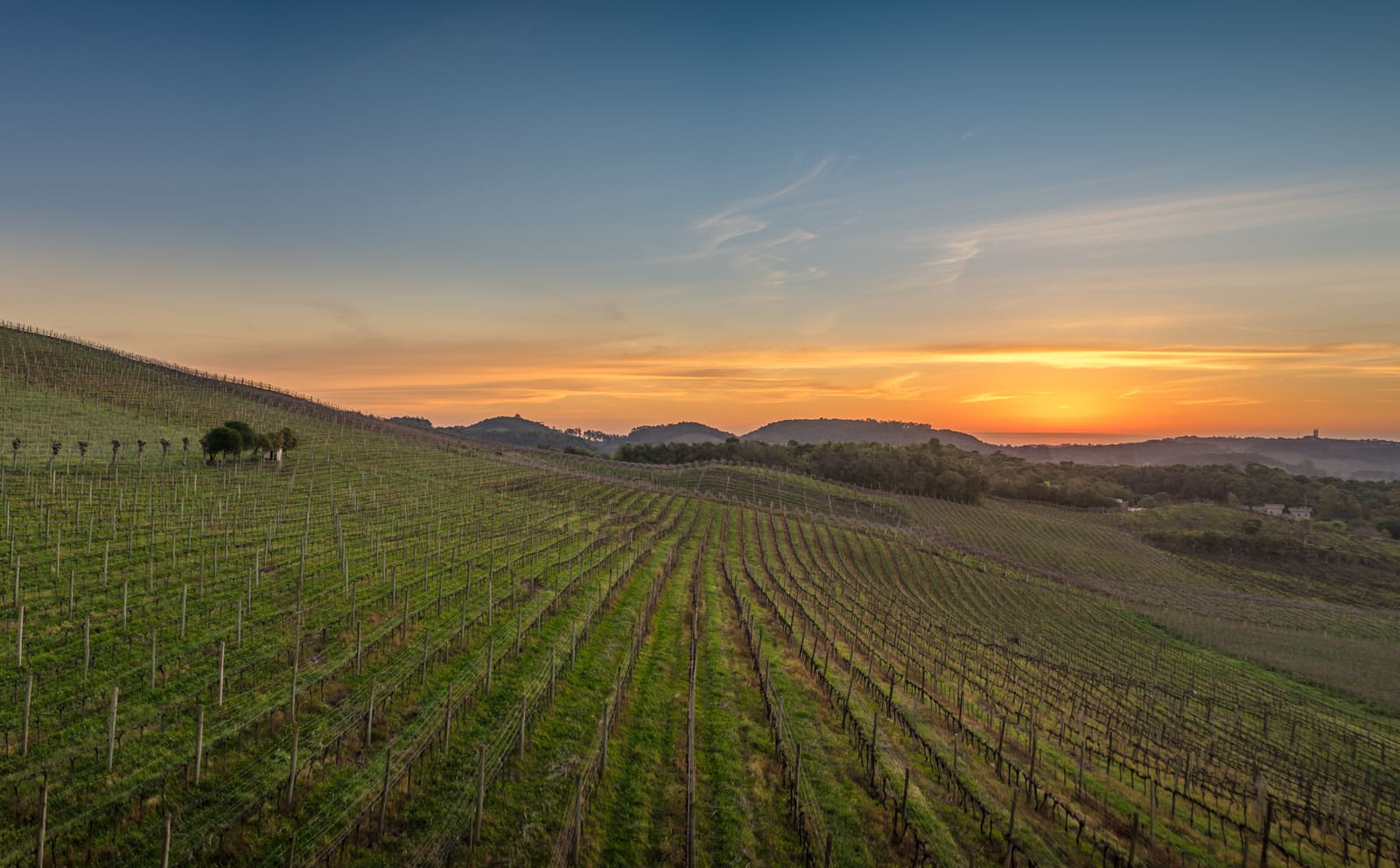
The center of it all is the Vale dos Vinhedos (Valley of the Vineyards), a belt of hills between 500 and 700 meters above sea level that brings together dozens of wineries, from big names to smaller producers. In 2002 the region became the first Indication of Provenance for wines in Brazil; in 2012 it received the Denomination of Origin, a seal that imposes stricter rules on growing and production. Away from the wine route, the Caminhos de Pedra (Stone Paths) preserve the basalt-stone buildings raised by the first settlers, now occupied by cheesemakers, distilleries and workshops. The Maria Fumaça, a steam train linking Bento Gonçalves with Garibaldi and Carlos Barbosa, crosses that same rural landscape on rides with tastings on board.
The right time to visit depends on what you are after. The grape harvest happens in summer, between January and March, when wineries open the harvest to visitors and the city puts on the Bento em Vindima program. It is also when the Fenavinho, created in 1967 and revived in 2019 after eight years on hold, celebrates local production. In autumn, between April and May, the vine leaves form a golden carpet, for many people the real reason for the trip. The mild climate of the highlands makes it easy to walk among the vineyards without hurry.
Updated on October 19, 2026
A route linking Bento Gonçalves, Garibaldi and Monte Belo do Sul through vineyard hills between 500 and 700 m above sea level. It was the first region in Brazil to receive the Indication of Provenance for wines, in 2002, and the Denomination of Origin ten years later.
Dozens of wineries, from the biggest to family producers, with tours of the vineyard, the cellar and the sparkling-wine cave, and guided tastings. There are large venues and more intimate ones, with high-altitude reds.
A winery specialized in sparkling wines made by the traditional method, from grapes grown in the high-altitude microterroir of Pinto Bandeira.
A historic steam train that covers about 23 km between Bento Gonçalves, Garibaldi and Carlos Barbosa, with a stop in Garibaldi and tastings of wine, sparkling wine and grape juice on board.
A rural route with basalt-stone houses built by the first Italian immigrants, now occupied by wineries, cheesemakers, distilleries and craft workshops: the best-preserved colonial stretch in the region.
The grape harvest happens in summer, between January and March, when wineries open the harvest to visitors and the city puts on the Bento em Vindima program. The Fenavinho, created in 1967 and revived in 2019, is also held at that time.
The city's main church, in a modern Gothic style designed by architect Bernardo Sartori, with a 40-meter tower built starting in 1949 and the towers completed in 1978, on Praça Padre Rui Lorenzi.
Brazil is in the Southern Hemisphere, so the seasons run opposite to those in Europe and North America: summer in Bento Gonçalves falls between December and March and winter between June and August. Summer is warm, with highs of 26 to 28.5 °C (January is the hottest month, at 28.5 °C), and winter is cold: in June, the coolest month, the average high is 18.5 °C and the low is 9.2 °C.
There is no clear dry season. The months with the least rain are April (98.5 mm over 9 days), August (118.9 mm over 10 days) and December (128.6 mm over 11 days). The wettest are October (203.5 mm over 12 days), June (189.7 mm over 10 days) and January (187.4 mm over 13 days). The rainy-day counts come from the Gramado station, in the same Serra Gaúcha.
In terms of weather, the best window runs from August to December, with September the best month, although it rains all year. But the decision depends on what you are after: the grape harvest (January to March) brings the picking and plenty of events, and autumn (April and May) turns the vines gold. Winter is colder and quieter, with better prices. These are historical averages and do not guarantee the weather on any given day.
| Month | High | Low | Rain | Rainy days | Rating |
|---|---|---|---|---|---|
| January | 29 °C | 17 °C | 187 mm | 13 | Fair |
| February | 28 °C | 19 °C | 145 mm | 11 | Fair |
| March | 26 °C | 16 °C | 133 mm | 10 | Good |
| April | 23 °C | 13 °C | 99 mm | 9 | Good |
| May | 20 °C | 11 °C | 156 mm | 10 | Fair |
| June | 19 °C | 9 °C | 190 mm | 10 | Fair |
| July | 19 °C | 10 °C | 143 mm | 11 | Fair |
| August | 22 °C | 11 °C | 119 mm | 10 | Good |
| September | 25 °C | 14 °C | 165 mm | 10 | Good |
| October | 26 °C | 15 °C | 204 mm | 12 | Fair |
| November | 28 °C | 17 °C | 179 mm | 11 | Fair |
| December | 27 °C | 16 °C | 129 mm | 11 | Good |
Monthly averages for 1991-2020 from INMET (Brazil's National Institute of Meteorology). The rating combines rainfall, temperature and humidity.
In summer (December to February), Bento Gonçalves has highs of around 28 °C (82 °F) and lows of 17 °C (63 °F), and it is the wetter season, with about 154 mm of rain spread over about 12 days a month. The days are hot and call for beach time and shade.
In fall (March to May), Bento Gonçalves has highs of around 23 °C (73 °F) and lows of 13 °C (55 °F), and it is the wetter season, with about 129 mm of rain spread over about 10 days a month. The weather is milder, good for walking and exploring without the summer heat.
In winter (June to August), Bento Gonçalves has highs of around 20 °C (68 °F) and lows of 10 °C (50 °F), and it is the wetter season, with about 150 mm of rain spread over about 10 days a month. The weather is milder, good for walking and exploring without the summer heat.
In spring (September to November), Bento Gonçalves has highs of around 26 °C (79 °F) and lows of 15 °C (59 °F), and it is the wetter season, with about 183 mm of rain spread over about 11 days a month. Temperatures are pleasant for sightseeing all day.
Weather, crowds, prices and what is happening at the destination in each period. Tap a month to open its full page; the colored dot shows how good the time is for a visit.
During harvest season, the wineries open special programming: grape stomping, guided harvesting and tastings in the Vale dos Vinhedos.
The Maria Fumaça (steam train) gets Christmas decorations and scenes along the route between Bento, Garibaldi and Carlos Barbosa.
Recurring annual events: exact dates change every year, so confirm them before you plan your trip.
The access airport is Salgado Filho International Airport (POA), in Porto Alegre, about 122 km from Bento Gonçalves.
The final stretch is by land. From Porto Alegre it is 122 km along the ERS-122 (Caminhos da Serra Gaúcha), about 1 h 45 min by car; from Gramado, 98 km (around 2 h) and from Caxias do Sul, 40 km (about 50 min).
Routes and airlines change often; the safest approach is to check them when planning your trip.
The Vale dos Vinhedos spans three municipalities: besides Bento Gonçalves, the region includes stretches of Garibaldi and Monte Belo do Sul, so it is worth considering a place to stay in any of the three. Because the Wine Route and the Caminhos de Pedra are rural and spread out, it is best to choose a base from which it is easy to reach the wineries that interest you most. During the grape harvest and on long holiday weekends, lodging prices and winery tours go up; outside high season there are more affordable options.
Rates change with the dates: confirm the price on Booking.com.
It depends on what you want to see: the grape harvest, between January and March, shows the picking of the grapes and fills the city with events; between April and May the vines turn golden, an autumn landscape that also draws many people. Winter is colder and quieter, with better prices.
In most cases, yes. Many wineries in the valley run on fixed tour times, especially in high season and on public holidays; it is best to book a few days ahead.
Two to three days are enough to see the Vale dos Vinhedos at a relaxed pace, visit a few wineries, ride the Maria Fumaça and stop by the Caminhos de Pedra without rushing.
From Porto Alegre it is about 1 h 45 min by car; from Gramado, around 2 h. You can do it in a single day, but since the wineries are spread across the valley, staying overnight allows a more relaxed itinerary.
Yes, mainly for the experience itself: the steam train covers about 23 km between Bento Gonçalves, Garibaldi and Carlos Barbosa, with a stop in Garibaldi and tastings of wine, sparkling wine and grape juice on board.
Lodging and winery tour prices go up during the grape harvest and on long holiday weekends, but outside high season you find more affordable options and you can eat well without spending as much as in Gramado.
The weather and population data in this guide come from official agencies and open databases. Entry requirements and health recommendations change: always check the official source linked.


