9.3· 25 reviews
Maragogi Beach Day Trip
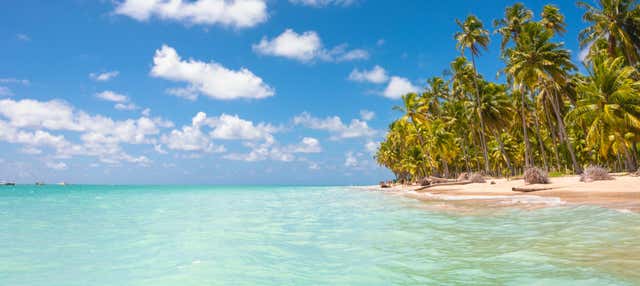
Explore the Brazilian Caribbean and discover a slice of paradise on this Maragogi Beach Day Trip! We'll spend the day relaxing on this beautiful beach.
8 h
from US$ 32
Porto de Galinhas is worth 3 to 4 days: for the natural pools at low tide and the village, plus a day trip to Maracaípe and Praia dos Carneiros. The best window runs from October to December, with highs of 30 to 31 °C and 39 to 62 mm of rain a month; from April to July it rains much more (391 mm over 22 days in June).
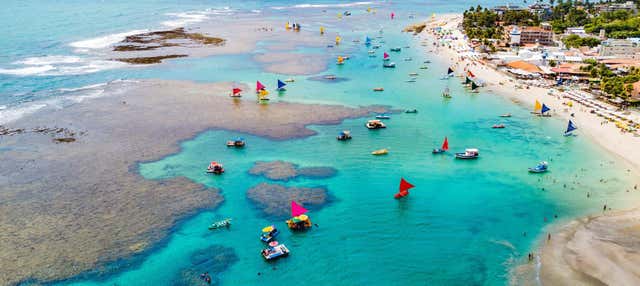
Porto de Galinhas is the most famous beach in Pernambuco and one of the best known in Brazil. It is in the municipality of Ipojuca, about 60 km south of Recife, and what made it famous are the natural pools: when the tide goes out, the reefs form tanks of warm, crystal-clear water just a few meters from the sand. Jangadeiros (the raft boatmen) take visitors out to them on jangadas, where you can float and swim surrounded by colorful fish.
The curious name (it means "Port of Hens") has historical roots. The story goes that, after the ban on the slave trade in the mid-19th century, the clandestine arrival of people was announced in code as "there is a new hen at the port", a reference to the guinea fowl carried on the same ships. The fishing village became, decades later, one of the most sought-after beach destinations in Brazil's Northeast, with a central village full of inns, buggy drivers and shops.
The climate is warm all year, with warm seas and the rainy season concentrated in the fall and winter (April to July). Besides the natural pools, the region is good for several days of outings: neighboring Maracaípe attracts surfers and has the Pontal, where you can see seahorses in the mangrove, and a little further south is Praia dos Carneiros, with its coconut grove and the famous chapel by the sea.
Updated on October 19, 2026
Tanks of warm, clear water formed by the reefs at low tide. Jangadas take you out to them to float and swim among colorful fish. The postcard image of the place.
A livelier, tree-lined beach next to the village, a spot for surfers and for anyone looking for a more rustic, less crowded atmosphere.
Where the river meets the sea, jangada trips go through the mangrove and show seahorses in their habitat. It is a protected area.
A little over 30 km to the south, a coconut grove, calm water and the iconic chapel by the sea make it one of the most beautiful beaches in Pernambuco. A classic for a day trip.
A small center full of inns, restaurants, craft shops and buggy drivers. At night it comes alive with music and bustle.
Licensed drivers link beaches, cliffs and swimming spots along the Ipojuca coast. It is the traditional way to explore the region.
Brazil is in the Southern Hemisphere, so the seasons are the reverse of those in Europe and North America: summer falls between December and March and winter between June and August. In Porto de Galinhas the change of season is barely noticeable: from December to March highs are 31 °C and lows 23 °C, and in July and August, the coolest months, the average high is 28 °C and the low is 21 °C. The reference climate is that of the Recife weather station.
Rain is what makes the difference. The driest months are November, with 39 mm over 7 days, October, with 53 mm over 9 days, and December, with 62 mm over 8 days. The wettest are June, with 391 mm over 22 days, May, with 317 mm over 19 days, and July, with 315 mm over 23 days.
The most favorable window runs from October to December, and November is the best month of the year. From September to February the weather is drier and sunnier; from April to July it rains more and the sea is rougher. No month guarantees the weather, but the heat stays all year. The natural pools only appear at low tide, so it is worth checking the tide table.
| Month | High | Low | Rain | Rainy days | Rating |
|---|---|---|---|---|---|
| January | 31 °C | 23 °C | 107 mm | 11 | Fair |
| February | 31 °C | 23 °C | 127 mm | 11 | Fair |
| March | 31 °C | 23 °C | 197 mm | 15 | Fair |
| April | 30 °C | 23 °C | 269 mm | 17 | Fair |
| May | 30 °C | 22 °C | 317 mm | 19 | Not recommended |
| June | 29 °C | 22 °C | 391 mm | 22 | Not recommended |
| July | 28 °C | 21 °C | 315 mm | 23 | Fair |
| August | 28 °C | 21 °C | 187 mm | 19 | Fair |
| September | 29 °C | 22 °C | 93 mm | 12 | Fair |
| October | 30 °C | 22 °C | 53 mm | 9 | Good |
| November | 30 °C | 23 °C | 39 mm | 7 | Good |
| December | 31 °C | 23 °C | 62 mm | 8 | Good |
Monthly averages for 1991-2020 from INMET (Brazil's National Institute of Meteorology). The rating combines rainfall, temperature and humidity.
In summer (December to February), Porto de Galinhas has highs of around 31 °C (88 °F) and lows of 23 °C (73 °F), and it is the wetter season, with about 99 mm of rain spread over about 10 days a month. The days are hot and call for beach time and shade.
In fall (March to May), Porto de Galinhas has highs of around 30 °C (86 °F) and lows of 23 °C (73 °F), and it is the wetter season, with about 261 mm of rain spread over about 17 days a month. The days are hot and call for beach time and shade.
In winter (June to August), Porto de Galinhas has highs of around 28 °C (82 °F) and lows of 21 °C (70 °F), and it is the wetter season, with about 298 mm of rain spread over about 21 days a month. The days are hot and call for beach time and shade.
In spring (September to November), Porto de Galinhas has highs of around 30 °C (86 °F) and lows of 22 °C (72 °F), and it is the driest time of year, with about 62 mm of rain a month. The days are hot and call for beach time and shade.
Weather, crowds, prices and what is happening at the destination in each period. Tap a month to open its full page; the colored dot shows how good the time is for a visit.
A festival for the patron saint of fishermen on June 29, with Mass, a procession by sea and cultural attractions.
A New Year's Eve party on the waterfront, with fireworks organized by the Ipojuca city government.
Recurring annual events: exact dates change every year, so confirm them before you plan your trip.
The gateway from abroad is Recife/Guararapes (Gilberto Freyre) International Airport, code REC, in Recife, about 60 km from Porto de Galinhas. The last stretch is by road.
From Recife it is 60 km (1 h to 1 h 30 min depending on traffic) along the BR-101 and the PE-060, with no toll, or along the PE-009 (Rota do Atlântico), which does have one. From Maceió it is 217 km (about 3 h 35 min).
Routes and airlines change often, so it is safest to check them when you plan your trip.
The central village of Porto de Galinhas has inns, restaurants, craft shops and buggy drivers, plenty of nightlife and an easy layout for getting around on foot. It is a good choice for families, because the natural pools have shallow, warm, calm water. Maracaípe, next to the village, is the option for anyone looking for a more rustic atmosphere, with surfing and fewer people. Praia dos Carneiros is a little over 30 km to the south and is usually visited as a day trip.
Rates change with the dates: confirm the price on Booking.com.
They form at low tide, when the reefs are exposed and the water becomes shallow and calm. Check the day's tide table to plan your jangada trip at the right time.
From September to February the weather is drier and sunnier. The most favorable window runs from October to December, with November as the best month (39 mm over 7 days). The rainy season runs from April to July, with more rain and a rougher sea.
It is about 60 km, 1 h to 1 h 30 min by car, depending on traffic. There is no toll on the BR-101 and the PE-060; on the PE-009 (Rota do Atlântico) a toll is charged.
Yes, at the Pontal de Maracaípe, on jangada trips through the mangrove with guides from the local association. It is a protected area, so contact is limited to observation.
Very. The natural pools have shallow, warm, calm water, ideal for families, and the village has inns, restaurants and everything within walking distance.
The most widely accepted version links it to the period after the ban on the slave trade: the clandestine arrival was announced in code as "a new hen at the port", a reference to the guinea fowl carried on the ships.
The weather and population data in this guide come from official agencies and open databases. Entry requirements and health recommendations change: always check the official source linked.