Rio de Janeiro Full-Day Tour + Christ the Redeemer and Sugarloaf Mountain by Minibus
Discover Rio de Janeiro on this complete tour. See the world-famous Christ the Redeemer Statue, Sugarloaf Mountain and the Maracana stadium in real life!
Rio de Janeiro is worth 4 to 5 days: one for Christ the Redeemer and Sugarloaf Mountain, another for the beaches of the South Zone, another for the historic center with Santa Teresa and Lapa, and one more for Tijuca Forest. The driest months run from May to September, with highs of 25 to 27 °C; summer, from December to March, is hotter, rainier and more expensive.
Rio is one of the few capitals in the world where tropical rainforest, beaches and mountains all lie within the urban area. In a single day you can go up to Christ the Redeemer in the morning, have lunch facing the sea at Copacabana and end the afternoon on Sugarloaf Mountain watching Guanabara Bay change color.
Life in the city is lived outdoors all year. The carioca winter (carioca means native to Rio) is rarely more than mild and brings the driest, clearest days: it is the best window for walking in Tijuca Forest and climbing to the viewpoints. Summer is the high season for the beach, with heat, humidity and afternoon showers.
Rio also works as a base for exploring the coast of the state: Búzios, Arraial do Cabo, Paraty and Ilha Grande are a few hours away by road or boat, which makes the city the natural starting point for a longer itinerary along the state's coast.
Updated on October 13, 2026
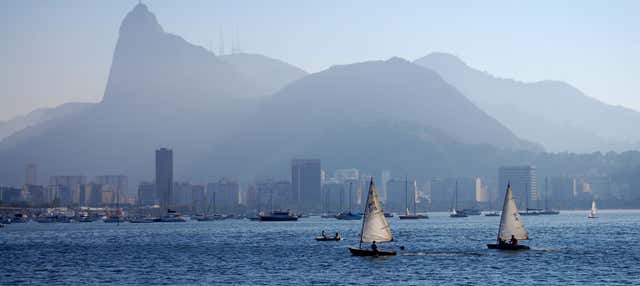
The Art Deco statue on top of Corcovado, at 710 m, with a 360-degree view over the city. It is best to go up early: there are shorter lines and less mist than at midday.
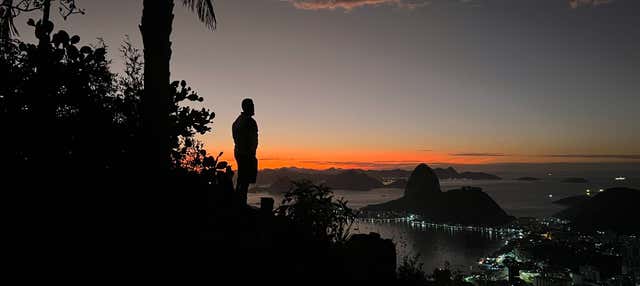
Two cable cars link Praia Vermelha with the 396 m peak. The sunset over Guanabara Bay is the most photographed in Rio.
The most charming beach of the South Zone, with the sunset framed by the Dois Irmãos peak. Posto 9 (Lifeguard Post 9) brings together the city's young, laid-back atmosphere.
Four kilometers of sand and the Portuguese-stone promenade with its wave pattern. Footvolley (volleyball played with the feet) and beach kiosks run all year, and this is where the New Year's Eve party is held.
A staircase of 215 steps covered with tiles from more than 60 countries, the work of the artist Jorge Selarón, on the climb that links Lapa with Santa Teresa.
The bohemian hillside neighborhood, linked to the center by the yellow tram, runs down to the Lapa Arches, where the samba nightlife is concentrated.
The largest urban rainforest in the world, with trails to Pico da Tijuca (1,021 m), waterfalls and the Vista Chinesa viewpoint.
Founded in 1808, it holds about 8,000 species, the avenue of imperial palms and an orchid house. It is a quiet, shaded outing, good for going with children.
Brazil is in the Southern Hemisphere, so the seasons are the reverse of those in Europe and North America: summer in Rio falls between December and March and winter between June and August. The city can be visited all year, because winter is mild: in July and August, the coolest months, the average high is 25 to 26 °C and the low is 18 °C.
For sightseeing with sun and little rain, the best time is May to September. July is the driest month, with about 41 mm of rain spread over 7 days; December and January are the wettest, with 137 mm over 13 days each and highs of 29 to 30 °C.
Summer is high season: the New Year's Eve party at Copacabana and Carnival, between February and March, fill the city and push up prices.
| Month | High | Low | Rain | Rainy days | Rating |
|---|---|---|---|---|---|
| January | 30 °C | 23 °C | 137 mm | 13 | Fair |
| February | 30 °C | 23 °C | 130 mm | 11 | Fair |
| March | 29 °C | 23 °C | 130 mm | 12 | Fair |
| April | 28 °C | 22 °C | 96 mm | 10 | Fair |
| May | 27 °C | 20 °C | 70 mm | 8 | Good |
| June | 26 °C | 19 °C | 49 mm | 7 | Good |
| July | 25 °C | 18 °C | 41 mm | 7 | Good |
| August | 26 °C | 18 °C | 44 mm | 7 | Good |
| September | 25 °C | 19 °C | 64 mm | 9 | Good |
| October | 26 °C | 20 °C | 89 mm | 11 | Good |
| November | 28 °C | 21 °C | 104 mm | 11 | Fair |
| December | 29 °C | 22 °C | 137 mm | 13 | Fair |
Monthly averages for 1991-2020 from INMET (Brazil's National Institute of Meteorology). The rating combines rainfall, temperature and humidity.
In summer (December to February), Rio de Janeiro has highs of around 30 °C (86 °F) and lows of 23 °C (73 °F), and it is the wetter season, with about 135 mm of rain spread over about 12 days a month. The days are hot and call for beach time and shade.
In fall (March to May), Rio de Janeiro has highs of around 28 °C (82 °F) and lows of 22 °C (72 °F), and it is the wetter season, with about 99 mm of rain spread over about 10 days a month. The days are hot and call for beach time and shade.
In winter (June to August), Rio de Janeiro has highs of around 26 °C (79 °F) and lows of 18 °C (64 °F), and it is the driest time of year, with about 45 mm of rain a month. Temperatures are pleasant for sightseeing all day.
In spring (September to November), Rio de Janeiro has highs of around 26 °C (79 °F) and lows of 20 °C (68 °F), and it is the wetter season, with about 86 mm of rain spread over about 10 days a month. Temperatures are pleasant for sightseeing all day.
Weather, crowds, prices and what is happening at the destination in each period. Tap a month to open its full page; the colored dot shows how good the time is for a visit.
Procession and Mass on January 20 in honor of the city's patron saint, from the Cathedral to the Church of São Sebastião.
Samba school parades at the Sapucaí Sambadrome and hundreds of blocos (street parties with live music) all over the city.
Arraiás (June festival gatherings) with quadrilha square dancing, traditional foods and a bonfire in neighborhoods, churches and at the Feira de São Cristóvão.
More than two million people dressed in white gather on the beach for the midnight fireworks, with concerts along the waterfront.
Recurring annual events: exact dates change every year, so confirm them before you plan your trip.
The gateway from abroad is Tom Jobim International Airport, known as Galeão (GIG), about 20 km from the South Zone. The trip by taxi or ride-hailing app to Copacabana or Ipanema takes 40 to 60 minutes, depending on traffic.
The second airport, Santos Dumont (SDU), is right next to downtown and is ideal for domestic flights.
Routes and airlines flying to Rio from each country change often, so it is safest to check them when you plan your trip. Within the city, the subway links Copacabana, Ipanema, downtown and the Maracanã.
Copacabana and Ipanema, in the South Zone, are connected by subway to downtown and Maracanã, and the touristy South Zone has a good police presence. Santa Teresa is the bohemian neighborhood on the hills, connected to downtown by the yellow tram.
Rates change with the dates: confirm the price on Booking.com.
May to September: these are the driest months, with average highs of 25 to 27 °C and clearer skies. Summer, from December to March, is the high season for the beach, but it is hotter, rainier (137 mm in December and in January) and prices go up.
Four to five days are enough for the main sights without rushing: one day for Christ the Redeemer and Sugarloaf Mountain, one for the beaches of the South Zone, one for the historic center, Santa Teresa and Lapa, and one for Tijuca Forest or a day trip to Búzios or Arraial do Cabo.
Yes, it is common. The best plan is to go up to Christ the Redeemer in the morning, right when it opens, when lines are shorter and there is less mist, and leave Sugarloaf Mountain for the late afternoon, with the sunset. In high season it is best to buy tickets in advance.
The tourist areas of the South Zone (Copacabana, Ipanema, Leblon), downtown during the day and the main sights have a police presence and plenty of people around. As in any big city, avoid showing valuables, get around by ride-hailing app at night and do not stray from busy areas.
By taxi or ride-hailing app the trip takes 40 to 60 minutes, depending on traffic. The airport is about 20 km from the South Zone.
No. In July and August, the coolest months, the average low is 18 °C and the high is 25 to 26 °C. A thin jacket is enough for the night and for the viewpoints, where it is windy.

The weather and population data in this guide come from official agencies and open databases. Entry requirements and health recommendations change: always check the official source linked.