
8.7· 94 reviews
Morro Branco, Fontes & Canoa Quebrada Beaches Tour
Discover Ceará's most beautiful beaches all in the same day. Enjoy the spectacular shores of Morro Branco, Praia das Fontes & Canoa Quebrada.
9 h
from US$ 20
Fortaleza calls for 4 to 5 days: for the urban beaches, the nightlife of Iracema, the Mercado Central and a day trip. The driest months run from August to December, with highs of 31 to 32 °C and 10 to 37 mm of rain per month; from February to May it rains much more.
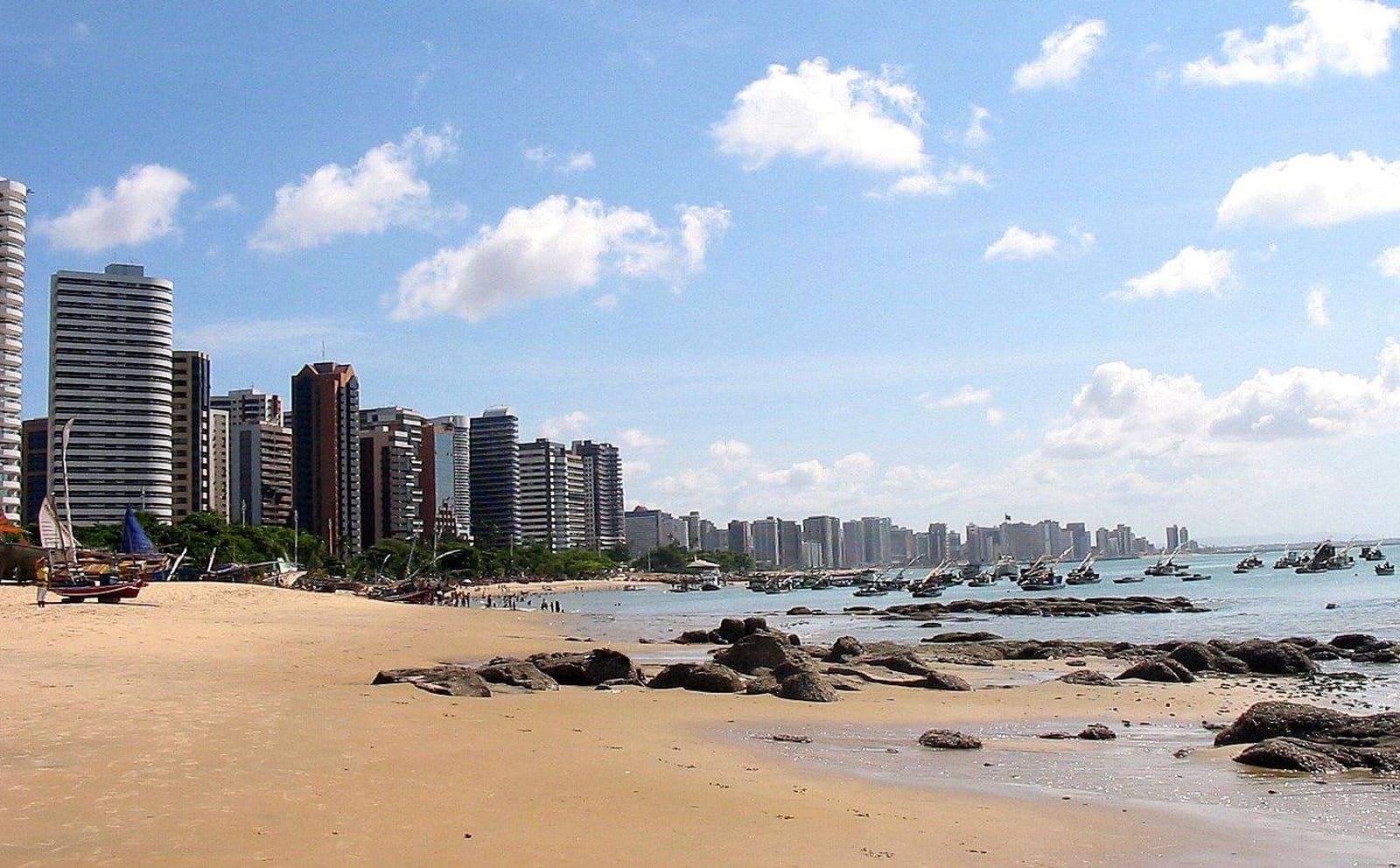
Fortaleza was born in the shadow of a Dutch fort in the 17th century and grew with its back to the interior and its face to the sea, until it became the capital of Ceará and one of the largest cities in the Northeast, with more than 2.4 million inhabitants. It is urban beach life at its purest: a seafront of kilometers running from Mucuripe to Praia do Futuro, with beach shacks (barracas) serving crab and ice-cold beer every day. A big, hot, outgoing city, lived outdoors and at night.
The climate is warm and sunny all year, with highs of 31 to 32 °C and a sea that is always warm. The season is defined by rain: the first half of the year, from February to May, brings the downpours (March and April are the wettest), while the second half, from August to December, is dry and steadily sunny, the high season on the coast. Even in the rainy season, the sun usually comes back out between showers.
Life in Fortaleza is the seafront. Beira-Mar has the promenade and the craft fair; Praia do Futuro lives on its barracas and its crab; Iracema Beach is the home of the bohemian scene and the Dragão do Mar Cultural Center. Downtown, the Mercado Central sells hammocks, lace and cachaça (a Brazilian sugarcane spirit), and the Theatro José de Alencar keeps its iron structure. The city is also a base for the Ceará coast: Cumbuco and the dunes on one side, the road to Canoa Quebrada and Jericoacoara on the other.
Updated on October 13, 2026
The liveliest urban beach in the city, famous for its big barracas and its crab. Thursday nights are a tradition.
A seafront promenade in the Meireles neighborhood, with a craft fair at night, kiosks and views toward Mucuripe.
A popular market with hammocks, lace, crafts and cachaça spread over several floors.
A cultural complex with museums, a planetarium and a cinema, in the bohemian heart of Iracema Beach.
A historic, bohemian beach at the center of the nightlife, with the Ponte dos Ingleses (English Bridge) and a good sunset.
An imposing neo-Gothic cathedral next to the Mercado Central, one of the largest in Brazil.
One of the largest water parks in Latin America, in Porto das Dunas, in Aquiraz, east of the city.
A historic theater with an Art Nouveau iron structure, a landmark of downtown architecture.
Brazil is in the Southern Hemisphere, so the seasons are the reverse of those in Europe and North America, although in Fortaleza you hardly notice: it is hot all year, with highs of 31 to 32 °C and lows of 23 to 25 °C. What shapes the year is the rain.
The best beach window runs from August to December, with steady sun and little rain. August records 20 mm over 3 days, September 14 mm over 3 days, and October and November are the driest, with 10 mm over 3 days each; December rises to 37 mm over 5 days.
From February to May the rain is concentrated. April is the wettest month, with 385 mm over 21 days, followed by March, with 337 mm over 20 days; May adds up to 229 mm over 16 days and February 187 mm over 14 days. The sun usually returns between showers, but it is wise to expect some cloudy days. The high season on the coast coincides with the dry months, from August to December.
| Month | High | Low | Rain | Rainy days | Rating |
|---|---|---|---|---|---|
| January | 31 °C | 25 °C | 156 mm | 13 | Fair |
| February | 31 °C | 24 °C | 187 mm | 14 | Not recommended |
| March | 31 °C | 24 °C | 337 mm | 20 | Not recommended |
| April | 31 °C | 24 °C | 385 mm | 21 | Not recommended |
| May | 31 °C | 24 °C | 229 mm | 16 | Not recommended |
| June | 31 °C | 23 °C | 130 mm | 10 | Fair |
| July | 31 °C | 23 °C | 70 mm | 7 | Good |
| August | 31 °C | 23 °C | 20 mm | 3 | Very good |
| September | 31 °C | 24 °C | 14 mm | 3 | Very good |
| October | 32 °C | 24 °C | 10 mm | 3 | Very good |
| November | 32 °C | 25 °C | 10 mm | 3 | Good |
| December | 32 °C | 25 °C | 37 mm | 5 | Good |
Monthly averages for 1991-2020 from INMET (Brazil's National Institute of Meteorology). The rating combines rainfall, temperature and humidity.
In summer (December to February), Fortaleza has highs of around 31 °C (88 °F) and lows of 25 °C (77 °F), and it is the wetter season, with about 127 mm of rain spread over about 11 days a month. The days are hot and call for beach time and shade.
In fall (March to May), Fortaleza has highs of around 31 °C (88 °F) and lows of 24 °C (75 °F), and it is the wetter season, with about 317 mm of rain spread over about 19 days a month. The days are hot and call for beach time and shade.
In winter (June to August), Fortaleza has highs of around 31 °C (88 °F) and lows of 23 °C (73 °F), and it is the wetter season, with about 73 mm of rain spread over about 7 days a month. The days are hot and call for beach time and shade.
In spring (September to November), Fortaleza has highs of around 32 °C (90 °F) and lows of 24 °C (75 °F), and it is the driest time of year, with about 11 mm of rain a month. The days are hot and call for beach time and shade.
Weather, crowds, prices and what is happening at the destination in each period. Tap a month to open its full page; the colored dot shows how good the time is for a visit.
Street celebrations with blocos (street parties), maracatu and the traditional parade on Avenida Domingos Olímpio.
A micareta (off-season Carnival) with trios elétricos (sound trucks) that draws crowds to the waterfront in July.
New Year's Eve with concerts and fireworks on the Beira-Mar waterfront and at the Aterro da Praia de Iracema.
Recurring annual events: exact dates change every year, so confirm them before you plan your trip.
The gateway from abroad is Pinto Martins International Airport (FOR), about 6 km from the center. A taxi or ride-hailing app gets you to the seafront quickly.
To explore the urban seafront you do not need to rent a car: between Beira-Mar, Iracema and Mucuripe you can get around on foot and by ride-hailing app. For the farther beaches, such as Cumbuco or Porto das Dunas, and for the coast to the east and west, a rental car or a tour helps.
The most popular area is Meireles, around Beira-Mar, with hotels, restaurants and the promenade. Iracema Beach is more bohemian and holds the nightlife. Mucuripe and Praia do Futuro are farther east. If your plans include Beach Park, there is also lodging in Porto das Dunas, in Aquiraz.
Rates change with the dates: confirm the price on Booking.com.
From August to December: it is the driest and sunniest period, with 10 to 37 mm of rain per month and highs of 31 to 32 °C. From February to May it rains more, peaking in March (337 mm) and April (385 mm), although the sun usually returns between showers. The heat is constant all year.
Four to five days is enough to enjoy the urban beaches, the nightlife of Iracema and the Mercado Central, and still fit in a day trip to Cumbuco or Beach Park. If you want to extend the trip to Jericoacoara or Canoa Quebrada, you need more days.
Pinto Martins International Airport is about 6 km from the center. A taxi or ride-hailing app gets you to the seafront quickly, with no need to rent a car.
Yes, thanks to its facilities: a long seafront with a promenade, beach barracas, Beach Park (one of the largest water parks in Latin America, in Aquiraz) and many hotels right on the waterfront. The nightlife is intense, but concentrated in specific spots.
Meireles, next to Beira-Mar, is the most popular area, with hotels, restaurants and the promenade; Iracema Beach holds the bohemian scene, and Mucuripe and Praia do Futuro are farther east. For Beach Park there is lodging in Porto das Dunas, in Aquiraz.
It is the best-known urban beach, with open sea and waves. The big draw is the large barracas, with facilities, music and seafood. Pay attention to currents on days when the sea is rough.
The weather and population data in this guide come from official agencies and open databases. Entry requirements and health recommendations change: always check the official source linked.


