8· 18 reviews
Meeting of the Waters Day Trip & Indigenous Village Visit
Witness the famous Meeting of Waters on this day trip from Manaus, where the dark waters of the Rio Negro collide with the sandy waters of the Amazon River!
7 h
from US$ 91
Manaus deserves 4 to 5 days. The best window runs from June to October, with August the driest month (56 mm over 6 days) and highs of 32 to 34 °C; from December to May it rains much more (331 mm over 18 days in April) and the river rises, making it possible to boat among the trees of the igarapés (narrow forest waterways). Heat and humidity are intense all year.
Manaus sits in the heart of the Amazon, at the confluence of the Negro River and the Solimões, which a few kilometers downstream form the Amazon River. It is the capital of Amazonas state and the largest city in northern Brazil: a metropolis of more than two million people surrounded by rainforest in every direction, with no reliable road connection to the rest of the country. You arrive by plane or by boat.
The city's heyday came between the late 19th and early 20th centuries, during the rubber boom, when latex from Amazonian rubber trees supplied world industry and poured fortunes into the city. This was when the Teatro Amazonas, inaugurated in 1896, and the Adolpho Lisboa Market, from 1883, with iron structures imported from Europe, were built. Manaus earned the nickname Paris of the Tropics. When rubber grown in Asia drove prices down, the economy collapsed and the city spent decades in decline.
The turnaround came with the Manaus Free Trade Zone, created in 1957 and reshaped by Decree-Law No. 288 of 1967, which established Suframa and an industrial hub with tax incentives. The model turned Manaus into a large industrial park for electronics and motorcycles, generating hundreds of thousands of jobs. Today the city combines that industry with nature tourism: it is the starting point for the Meeting of the Waters, igarapé boat trips and the Anavilhanas archipelago.
Updated on October 19, 2026
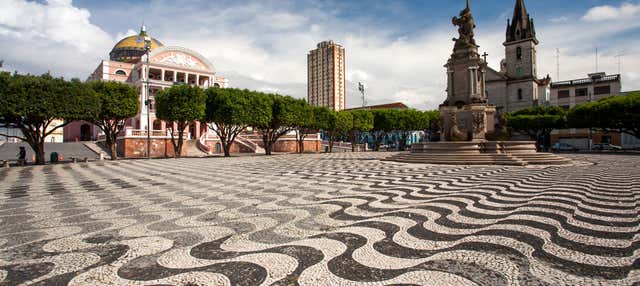
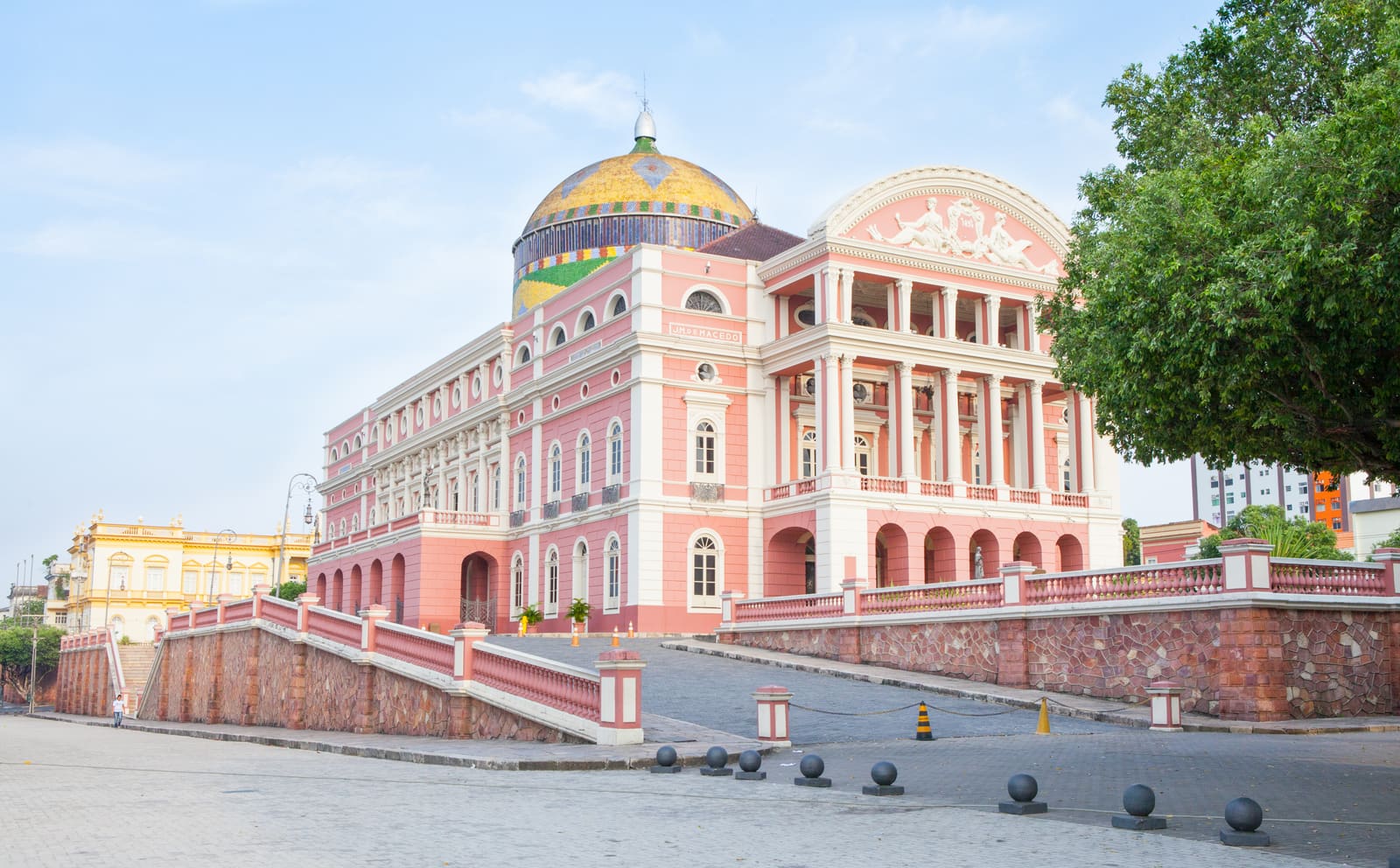
An opera house inaugurated in 1896, at the height of the rubber boom, and the city's greatest symbol. The dome is covered with about 36,000 ceramic scales brought from Alsace, and the interior used Carrara marble and Scottish steel.
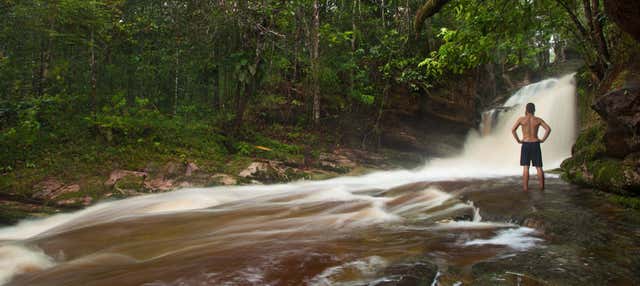
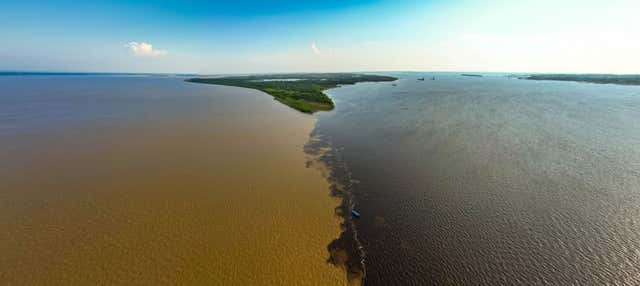
A few kilometers from the city, the dark waters of the Negro River run side by side with the muddy waters of the Solimões for more than 6 km without mixing. The phenomenon happens because the two rivers differ in temperature, speed and density.
A freshwater city beach on the bank of the Negro River, one of Manaus's main postcard views. The Portuguese-stone promenade has an amphitheater, kiosks and restaurants serving regional food.
An open-air museum and botanical garden inside the Adolpho Ducke Forest Reserve. The highlight is the 42-meter observation tower, which lets you look at the forest canopy from above.
A historic public market on the banks of the Negro River, inaugurated in 1883, with an iron structure imported from Europe and inspired by the old Les Halles market in Paris. It is the main place to buy typical Amazonian products and foods.
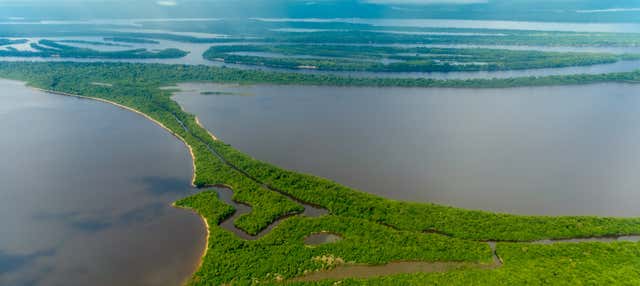
With about 400 islands in the Negro River, it is the second-largest river archipelago in the world. In the high-water season it becomes a maze of igarapés and flooded forest, an ideal base for boat trips and for spotting botos (river dolphins).
Brazil is in the Southern Hemisphere, so the seasons are reversed compared with Europe and North America: summer runs from December to March and winter from June to August. But in Manaus the year is shaped by rain more than by cold: highs range from 31 °C in the rainy months to 34 °C between August and October, and lows stay between 24 and 25 °C. The coolest months are January to April, with a 31 °C high and a 24 °C low.
The dry season runs from June to November, and the high-water season from December to May. August is the driest month, with 56 mm over 6 days, followed by July (67 mm over 7 days) and September (79 mm over 6 days). April is the wettest, with 331 mm over 18 days, followed by March (321 mm over 19 days) and January (306 mm over 19 days).
Which season to choose depends on the trip. In the dry season river beaches and forest trails appear; in the high-water season you can boat among the trees in the igarapés. The best weather window runs from June to October, but the two seasons offer different excursions.
| Month | High | Low | Rain | Rainy days | Rating |
|---|---|---|---|---|---|
| January | 31 °C | 24 °C | 306 mm | 19 | Not recommended |
| February | 31 °C | 24 °C | 297 mm | 18 | Not recommended |
| March | 31 °C | 24 °C | 321 mm | 19 | Not recommended |
| April | 31 °C | 24 °C | 331 mm | 18 | Not recommended |
| May | 32 °C | 24 °C | 233 mm | 16 | Not recommended |
| June | 32 °C | 24 °C | 117 mm | 10 | Fair |
| July | 33 °C | 24 °C | 67 mm | 7 | Good |
| August | 34 °C | 24 °C | 56 mm | 6 | Good |
| September | 34 °C | 25 °C | 79 mm | 6 | Good |
| October | 34 °C | 25 °C | 114 mm | 8 | Fair |
| November | 33 °C | 24 °C | 188 mm | 10 | Fair |
| December | 32 °C | 24 °C | 254 mm | 15 | Not recommended |
Monthly averages for 1991-2020 from INMET (Brazil's National Institute of Meteorology). The rating combines rainfall, temperature and humidity.
In summer (December to February), Manaus has highs of around 31 °C (88 °F) and lows of 24 °C (75 °F), and it is the wetter season, with about 286 mm of rain spread over about 17 days a month. The days are hot and call for beach time and shade.
In fall (March to May), Manaus has highs of around 31 °C (88 °F) and lows of 24 °C (75 °F), and it is the wetter season, with about 295 mm of rain spread over about 18 days a month. The days are hot and call for beach time and shade.
In winter (June to August), Manaus has highs of around 33 °C (91 °F) and lows of 24 °C (75 °F), and it is the wetter season, with about 80 mm of rain spread over about 8 days a month. The days are hot and call for beach time and shade.
In spring (September to November), Manaus has highs of around 34 °C (93 °F) and lows of 25 °C (77 °F), and it is the wetter season, with about 127 mm of rain spread over about 8 days a month. The days are hot and call for beach time and shade.
Weather, crowds, prices and what is happening at the destination in each period. Tap a month to open its full page; the colored dot shows how good the time is for a visit.
An opera festival at the Teatro Amazonas and other cultural venues, with productions and artists from Brazil and abroad.
A competition among Manaus folk groups with quadrilha square dancing, cirandas (circle dances), regional dances and bois-bumbás (folk pageants with a bull figure) during the June festival season.
The official New Year's Eve party at the Ponta Negra tourist complex, with live music and fireworks.
Recurring annual events: exact dates change every year, so confirm them before you plan your trip.
The gateway is Eduardo Gomes International Airport (MAO), in Manaus, about 14 km from the center. Manaus has no reliable road connection to the rest of the country: you reach the city by plane or by boat. Routes and airlines change often; the safest approach is to check them when planning your trip.
The BR-319, which links Manaus to Porto Velho, has been impassable for most of its length since 1988, especially in the rainy season. The only reasonable road connection is the BR-174, to the north, toward Boa Vista.
The attractions are spread across the city and its surroundings: the Teatro Amazonas and the Adolpho Lisboa Market, the city beach of Ponta Negra, MUSA in the Ducke Reserve, and the boat trips to the Meeting of the Waters and Anavilhanas, which the tour agencies organize. It is best to choose lodging near what you most want to visit and to allow for travel time.
Rates change with the dates: confirm the price on Booking.com.
In practice, not reliably. The BR-319, which links Manaus to Porto Velho, has been impassable for much of its length since 1988, especially in the rainy season. The usual way to arrive is by plane or by boat. The only reasonable road connection is the BR-174, to the north, toward Boa Vista.
UTC−4, Amazon time, one hour behind Brasília. That difference is constant all year.
It is the point where the dark Negro River and the muddy Solimões run side by side for more than 6 km without mixing, because of differences in the temperature, speed and density of their waters. It is usually visited on a boat trip.
It depends on what you want. In the dry season (roughly June to November) river beaches and trails appear; in the high-water season (December to May) you can boat among the trees of the flooded forest. The two seasons offer different excursions.
It is enough for the Teatro Amazonas and the Adolpho Lisboa Market, the city beach of Ponta Negra, MUSA in the Ducke Reserve, and the boat trips to the Meeting of the Waters and Anavilhanas, which the tour agencies organize.
It is the second-largest river archipelago in the world, with about 400 islands in the Negro River. The largest is the Mariuá archipelago, in Barcelos, also in Amazonas, with roughly 700 islands.
The weather and population data in this guide come from official agencies and open databases. Entry requirements and health recommendations change: always check the official source linked.