8.5· 166 reviews
Iguazú Falls Argentine Side Tour
Explore the stunning Iguazú Falls on the Argentine side. Discover the most spectacular area of this natural wonder and enjoy the amazing views!
7 h
from US$ 44
Foz do Iguaçu calls for 3 to 4 days: one for Iguazu Falls on the Brazilian side, another for the Argentine side, and the rest for the Itaipu power plant and Parque das Aves (Bird Park). The months with the least rain run from June to August, with highs of 24 to 26 °C and 97 to 145 mm; summer is hotter (up to 33 °C in January) and the falls carry more water.
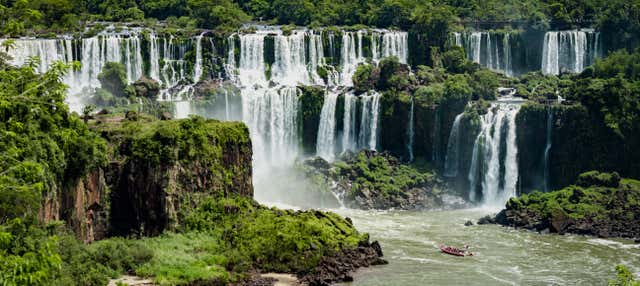
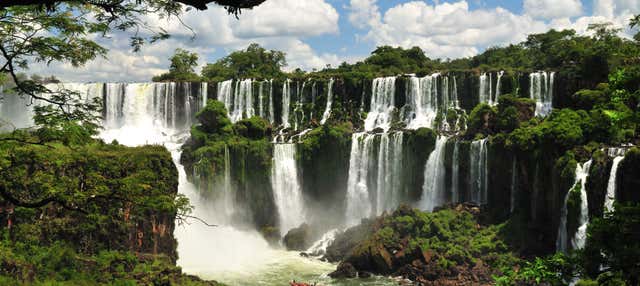
Foz do Iguaçu sits at the far western tip of the state of Paraná, where the Iguaçu River meets the Paraná River, on the border between Brazil, Argentina and Paraguay. The city grew up around two works of enormous scale: Iguazu Falls, with about 275 drops spread along a cliff face of almost three kilometers, and the Itaipu hydroelectric plant, which for years was the largest in the world in power generation. They are only a few kilometers apart and can be seen on the same trip.
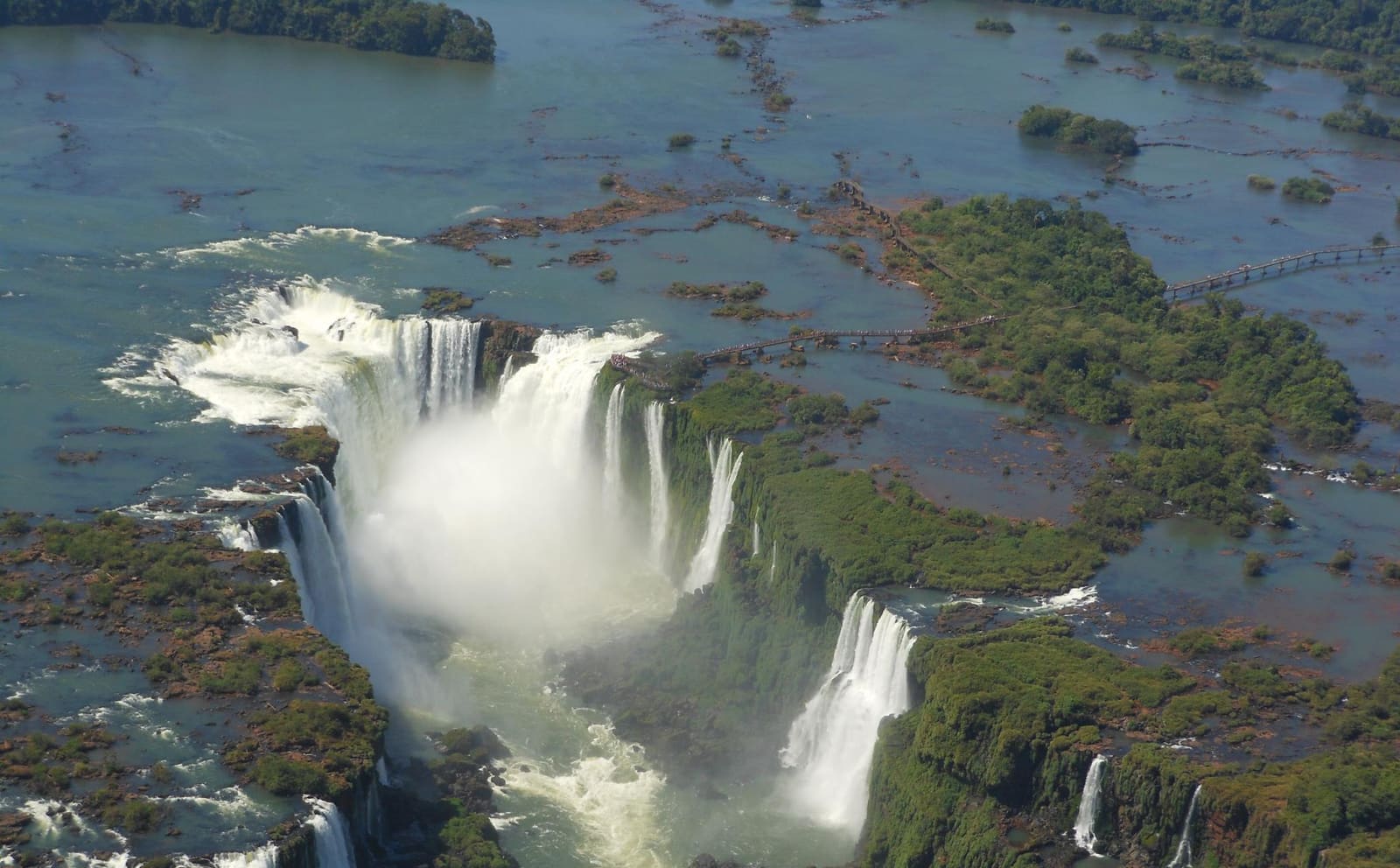
The falls lie inside Iguaçu National Park, a protected area of Atlantic Forest that has been a UNESCO World Heritage Site since 1986. On the Brazilian side, a walkway leads to the base of the Devil's Throat, the largest of the drops, where the water and the mist soak everyone up close. On the Argentine side, in Puerto Iguazú, longer walkways reach the edge of the Throat from above. The two sides are different, and many people visit both on separate days.
Besides the water, Foz lives off the border. The Three Borders Landmark marks the exact point where Brazil, Argentina and Paraguay meet on the rivers, with obelisks on all three banks. On the Paraguayan side, Ciudad del Este draws shoppers, and Parque das Aves, a bird park next to the entrance of the national park, brings together toucans, macaws and Atlantic Forest birds in walk-through aviaries. It is a destination that combines grand nature, engineering and the comings and goings of three countries.
Updated on October 13, 2026
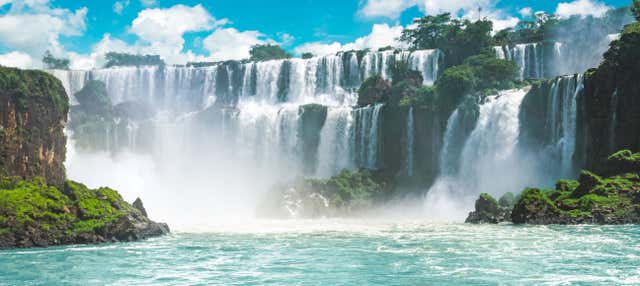
A group of about 275 drops along a cliff face of almost 3 km. The walkway on the Brazilian side reaches the base of the Devil's Throat, where the mist soaks everyone.
The largest of the drops, reached by the walkway on the Brazilian side up to its base. The mist drenches anyone who gets close, so it is wise to bring a raincoat and protect your camera and phone.
Longer walkways that reach the edge of the Devil's Throat from above. The view is different from the Brazilian side, and many visitors do both sides on separate days.
A protected area of Atlantic Forest and a UNESCO World Heritage Site since 1986, home to the falls, trails and wildlife such as coatis and toucans.
One of the largest hydroelectric plants in the world, with guided tours of the dam and the spillway, plus night lighting on special dates.
The point where Brazil, Argentina and Paraguay meet on the Iguaçu and Paraná rivers, with an obelisk, a viewpoint and a night show at sunset.
A bird sanctuary next to the entrance of the national park, with walk-through aviaries among toucans, macaws and Atlantic Forest birds.
Brazil is in the Southern Hemisphere, so the seasons are the reverse of those in Europe and North America: summer falls between December and March and winter between June and August. In Foz do Iguaçu summer is hot, with highs of 32 to 33 °C from December to February, and winter is mild: in July, the coolest month, the average high is 24 °C and the low is 13 °C.
It rains all year, with no truly dry season, but there are differences. August is the month with the least rain, with 97 mm over 8 days, followed by July (121 mm over 7 days) and June (145 mm over 8 days). October is the wettest, with 204 mm over 10 days, followed by December (194 mm) and February (180 mm).
The falls are impressive all year. In the rainy summer the volume of water is greater; winter, drier and milder, tends to bring days of clear skies and is more comfortable for walking the walkways.
| Month | High | Low | Rain | Rainy days | Rating |
|---|---|---|---|---|---|
| January | 33 °C | 22 °C | 166 mm | 10 | Fair |
| February | 32 °C | 22 °C | 180 mm | 10 | Fair |
| March | 31 °C | 21 °C | 150 mm | 8 | Fair |
| April | 29 °C | 18 °C | 149 mm | 7 | Good |
| May | 25 °C | 15 °C | 166 mm | 8 | Good |
| June | 24 °C | 14 °C | 145 mm | 8 | Good |
| July | 24 °C | 13 °C | 121 mm | 7 | Good |
| August | 26 °C | 14 °C | 97 mm | 8 | Good |
| September | 28 °C | 16 °C | 163 mm | 9 | Good |
| October | 30 °C | 19 °C | 204 mm | 10 | Fair |
| November | 31 °C | 19 °C | 165 mm | 9 | Fair |
| December | 32 °C | 21 °C | 194 mm | 8 | Fair |
Monthly averages for 1991-2020 from INMET (Brazil's National Institute of Meteorology). The rating combines rainfall, temperature and humidity.
In summer (December to February), Foz do Iguaçu has highs of around 32 °C (90 °F) and lows of 22 °C (72 °F), and it is the wetter season, with about 180 mm of rain spread over about 9 days a month. The days are hot and call for beach time and shade.
In fall (March to May), Foz do Iguaçu has highs of around 28 °C (82 °F) and lows of 18 °C (64 °F), and it is the wetter season, with about 155 mm of rain spread over about 8 days a month. The days are hot and call for beach time and shade.
In winter (June to August), Foz do Iguaçu has highs of around 25 °C (77 °F) and lows of 14 °C (57 °F), and it is the wetter season, with about 121 mm of rain spread over about 8 days a month. Temperatures are pleasant for sightseeing all day.
In spring (September to November), Foz do Iguaçu has highs of around 30 °C (86 °F) and lows of 18 °C (64 °F), and it is the wetter season, with about 177 mm of rain spread over about 9 days a month. The days are hot and call for beach time and shade.
Weather, crowds, prices and what is happening at the destination in each period. Tap a month to open its full page; the colored dot shows how good the time is for a visit.
A tourism fair and event focused on innovation and sustainability, one of the largest in the industry in Brazil.
Christmas programming with light displays, cultural performances and scenery in squares and avenues across the city.
Recurring annual events: exact dates change every year, so confirm them before you plan your trip.
Foz do Iguaçu has its own international airport, Foz do Iguaçu International Airport (Cataratas), with the code IGU, about 13 km from the city.
The ride into the city is short. Routes and airlines arriving from each country change often; the safest approach is to check them when you plan your trip.
It is best to choose a place to stay close to what you most want to visit and to work out the travel time to the national park, where the falls on the Brazilian side are, and Parque das Aves, right by its entrance. If you plan to spend a day on the Argentine side, keep in mind that it is in Puerto Iguazú, across the border.
Rates change with the dates: confirm the price on Booking.com.
The falls are impressive all year. From June to August it rains less (97 to 145 mm) and highs are 24 to 26 °C, comfortable for walking the walkways. In summer, with highs of 32 to 33 °C, the flow is greater, but it is also hotter and rainier.
Three to four days is enough for the Brazilian side of the falls, the Argentine side, the Itaipu plant and Parque das Aves without rushing. With 2 days you can see the essentials, but it is tight.
The airport (IGU) is about 13 km from the city, so the transfer is short.
Yes. The Brazilian side offers the panoramic view of the whole group of drops and the walkway to the base of the Devil's Throat. The Argentine side, in Puerto Iguazú, has longer walkways that reach the edge of the Throat from above. They are different, complementary experiences.
Yes, and quite a lot. On the Devil's Throat walkway, on the Brazilian side, the mist from the drops soaks anyone nearby. Bring a raincoat and protect your electronics.
Yes. The walkways at the falls are accessible, Parque das Aves delights children with toucans and macaws up close, and a visit to Itaipu makes a good engineering lesson.
The weather and population data in this guide come from official agencies and open databases. Entry requirements and health recommendations change: always check the official source linked.