8.6· 145 reviews
Jardineira Tour
In this jardineira tour of Ouro Preto, we'll embark on a panoramic tour, allowing you to take in the city's primary attractions from a unique perspective.
4 h 30 min
from US$ 19
Ouro Preto is worth 2 to 3 days: the Baroque churches, Tiradentes Square, a museum and a mine, with time to take the hills slowly. The driest months run from May to August, with highs of 25 to 26 °C and 5 to 28 mm of rain a month; summer, from December to March, is hotter and wetter, with up to 339 mm in December.
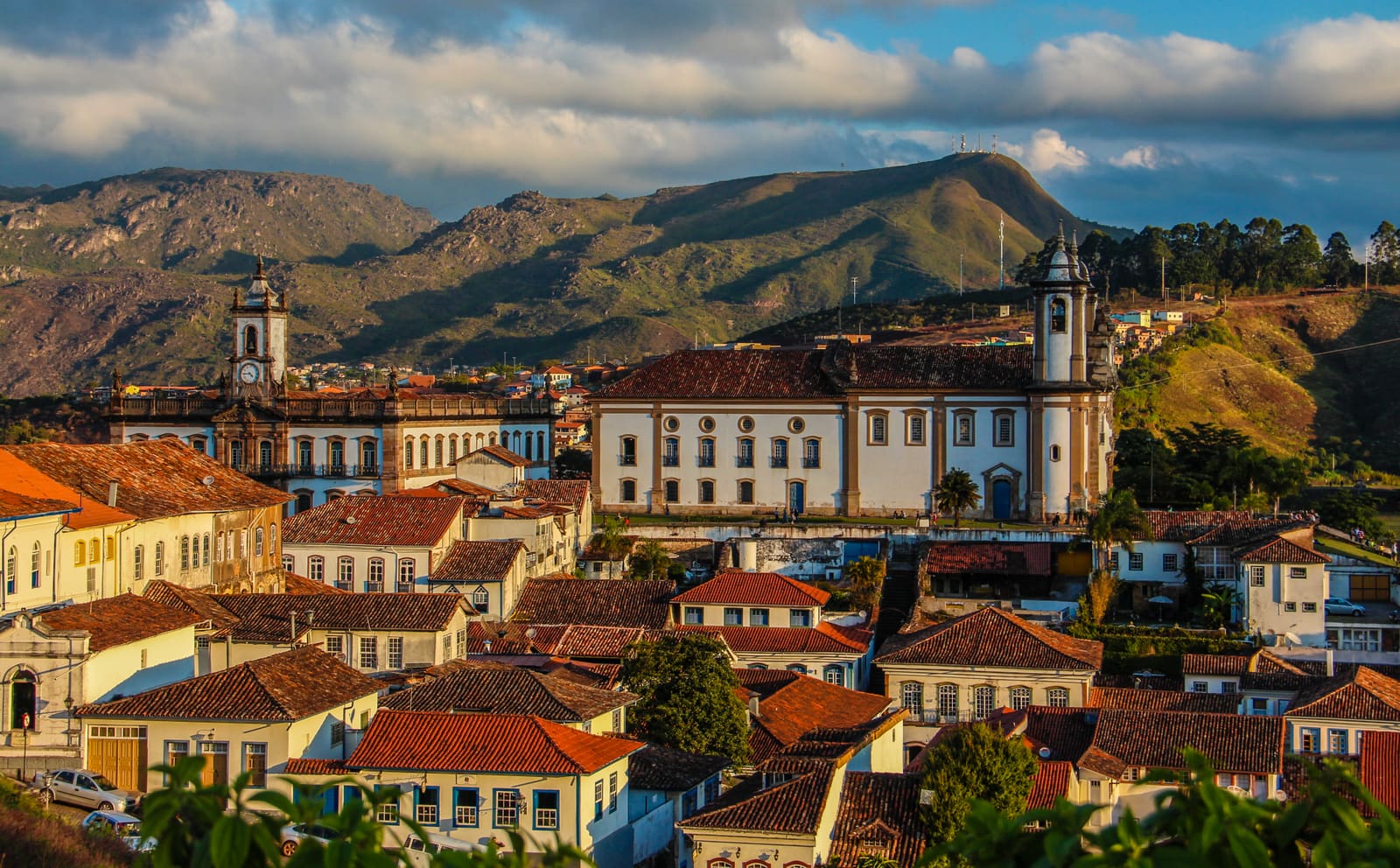
Ouro Preto began as Vila Rica, at the height of the 18th-century gold rush, and for decades it was the richest and most populous city in the Portuguese colony in the Americas. That wealth turned into stone and gilded woodcarving: the cluster of churches, mansions and steep streets rising and falling along the slopes of the Serra de Ouro Preto is so exceptional that it became the first Brazilian site recognized as a UNESCO World Heritage Site, in 1980.
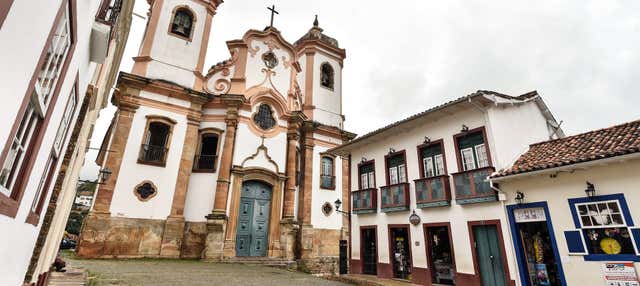
This is where the Baroque and Rococo of Minas Gerais reach their peak, largely thanks to Antônio Francisco Lisboa, known as Aleijadinho, and the painter Manoel da Costa Ataíde. The Church of Saint Francis of Assisi, with its sculpted facade and richly worked interior, is considered one of the masterpieces of Brazilian Baroque. The city was also the setting of the Inconfidência Mineira, an uprising against Portuguese rule, and the Inconfidência Museum on Tiradentes Square preserves that memory.
Getting around Ouro Preto means climbing and descending steep stone streets at almost 1,200 meters above sea level, so bring comfortable shoes and some stamina. The climate is mountain weather, with cool nights all year and dry, mild winters. It is a university and bohemian town, where the weight of history mixes with student houses, cachaça bars (cachaça is Brazil's sugarcane spirit), pubs and a Minas Gerais cuisine that runs from feijão tropeiro (beans with pork and cassava flour) to sweets. It is a destination to enjoy slowly, church by church and corner by corner.
Updated on October 13, 2026
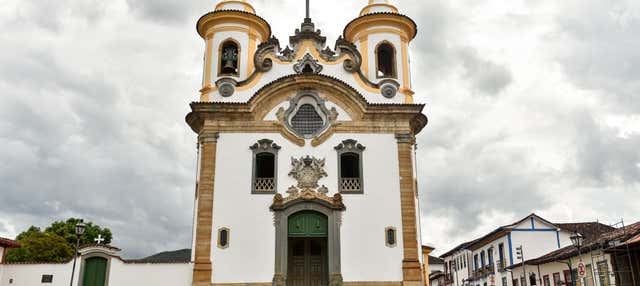
A masterpiece of Brazilian Baroque, with a facade sculpted by Aleijadinho and ceiling paintings by Mestre Ataíde. It is one of the most important churches in the country.
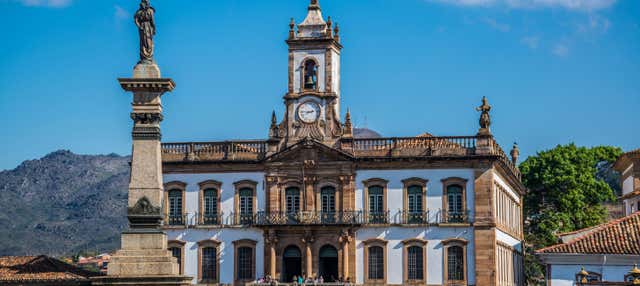
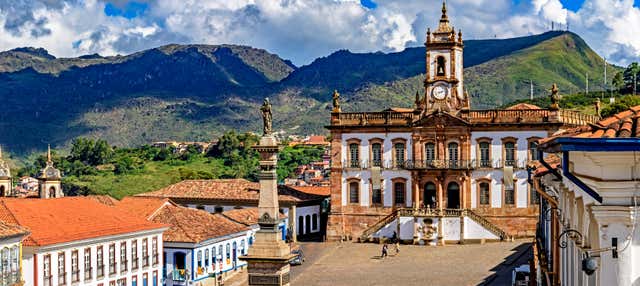
The heart of Ouro Preto, surrounded by colonial mansions and museums, with the statue of Tiradentes in the center. It is the meeting point and starting point for exploring the city.
Housed in the former Town Hall and Jail on Tiradentes Square, it holds material on the Inconfidência Mineira and sacred art, including pieces by Aleijadinho.
A former gold mine open to visitors, with galleries dug in the 18th century and the legend of Chico Rei, the enslaved African who is said to have bought his own freedom.
One of the richest interiors of Minas Gerais Baroque, with gold-covered carvings and a sacred art museum in the basement.
A late Baroque church with Aleijadinho involved in the design, an elegant facade and a finely worked interior, close to Tiradentes Square.
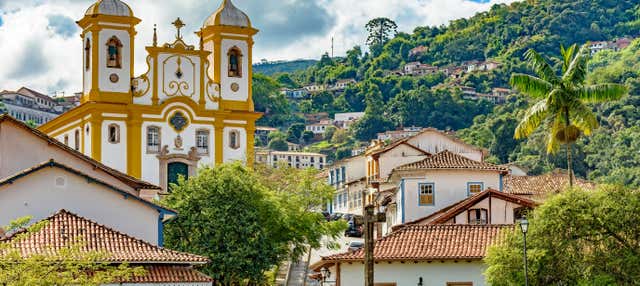
The layout of the city itself, wedged into the mountains, offers views of the rooftops, church towers and hills, at almost 1,200 m above sea level.
Brazil is in the Southern Hemisphere, so the seasons are the reverse of those in Europe and North America: summer in Ouro Preto falls between December and March and winter between June and August. Because of the altitude, nights are cool all year: in June and July, the coolest months, the average high is 25 °C and the low is 15 °C.
For walking with little rain, the best time is the dry winter, from May to August, with highs of 25 to 26 °C and lows of 15 to 17 °C. July is the driest month, with 5 mm of rain on 1 day; June and August get 11 mm each. Summer is hot and rainy, with highs of 28 to 29 °C and heavy afternoon downpours: December is the wettest month, with 339 mm over 17 days, followed by January with 331 mm over 15 days.
| Month | High | Low | Rain | Rainy days | Rating |
|---|---|---|---|---|---|
| January | 29 °C | 20 °C | 331 mm | 15 | Fair |
| February | 29 °C | 20 °C | 178 mm | 10 | Fair |
| March | 28 °C | 20 °C | 198 mm | 11 | Fair |
| April | 28 °C | 19 °C | 82 mm | 7 | Good |
| May | 26 °C | 17 °C | 28 mm | 3 | Very good |
| June | 25 °C | 15 °C | 11 mm | 1 | Very good |
| July | 25 °C | 15 °C | 5 mm | 1 | Very good |
| August | 26 °C | 16 °C | 11 mm | 1 | Very good |
| September | 28 °C | 17 °C | 49 mm | 4 | Very good |
| October | 29 °C | 19 °C | 110 mm | 8 | Good |
| November | 28 °C | 19 °C | 236 mm | 14 | Fair |
| December | 28 °C | 20 °C | 339 mm | 17 | Fair |
Monthly averages for 1991-2020 from INMET (Brazil's National Institute of Meteorology). The rating combines rainfall, temperature and humidity.
In summer (December to February), Ouro Preto has highs of around 29 °C (84 °F) and lows of 20 °C (68 °F), and it is the wetter season, with about 283 mm of rain spread over about 14 days a month. The days are hot and call for beach time and shade.
In fall (March to May), Ouro Preto has highs of around 27 °C (81 °F) and lows of 19 °C (66 °F), and it is the wetter season, with about 103 mm of rain spread over about 7 days a month. Temperatures are pleasant for sightseeing all day.
In winter (June to August), Ouro Preto has highs of around 25 °C (77 °F) and lows of 15 °C (59 °F), and it is the driest time of year, with about 9 mm of rain a month. Temperatures are pleasant for sightseeing all day.
In spring (September to November), Ouro Preto has highs of around 28 °C (82 °F) and lows of 18 °C (64 °F), and it is the wetter season, with about 132 mm of rain spread over about 9 days a month. The days are hot and call for beach time and shade.
Weather, crowds, prices and what is happening at the destination in each period. Tap a month to open its full page; the colored dot shows how good the time is for a visit.
Street Carnival with blocos (street parties) and dances in the student houses known as repúblicas, one of the busiest in Minas Gerais.
Traditional religious celebrations with processions and decorated carpets on the streets, recalling the Passion of Christ.
A July cultural event with music, theater, dance, exhibitions and workshops around the city.
A literary festival run by UFOP (the Federal University of Ouro Preto), bringing together Brazilian and international authors for discussions on literature.
Recurring annual events: exact dates change every year, so confirm them before you plan your trip.
From abroad, you arrive through Tancredo Neves International Airport (CNF), in Confins, about 139 km from the city, and from there you continue overland.
From Belo Horizonte, Ouro Preto is about 100 km away, around 1 h 45 min by car, and regular buses leave from Belo Horizonte. Routes and airlines serving the region change often, so it is safest to check them when you plan your trip.
The historic center holds a good part of what you visit: Tiradentes Square, the Inconfidência Museum and the Church of Our Lady of Mount Carmel are all close together.
Rates change with the dates: confirm the price on Booking.com.
Winter, from May to August, is dry and mild, ideal for walking: highs of 25 to 26 °C and only 5 to 28 mm of rain a month. Summer, from December to March, is the wettest, with 339 mm in December and heavy afternoon downpours.
Two to three days is enough to see the main churches, Tiradentes Square, a museum and a mine, with time to climb and descend the hills without rushing.
Tancredo Neves International Airport (CNF), in Confins, is about 139 km from the city. From Belo Horizonte it is about 100 km, around 1 h 45 min by car, and regular buses leave from there.
Yes, it takes some stamina: the whole city is built on steep stone streets, at almost 1,200 m above sea level. Comfortable shoes make a big difference, and anyone with reduced mobility should plan the route carefully.
You can, since it is about 100 km, 1 h 45 min by car, but it feels rushed. To see the churches and the historic center at a relaxed pace, it is best to spend at least one night in the city.
Many do, and they keep their own visiting hours and close during Mass. Carry cash or a card and check the hours, as some churches do not allow photos inside.
The weather and population data in this guide come from official agencies and open databases. Entry requirements and health recommendations change: always check the official source linked.