
9· 27 reviews
Day Trip to Tambaba & Coqueirinho Beaches
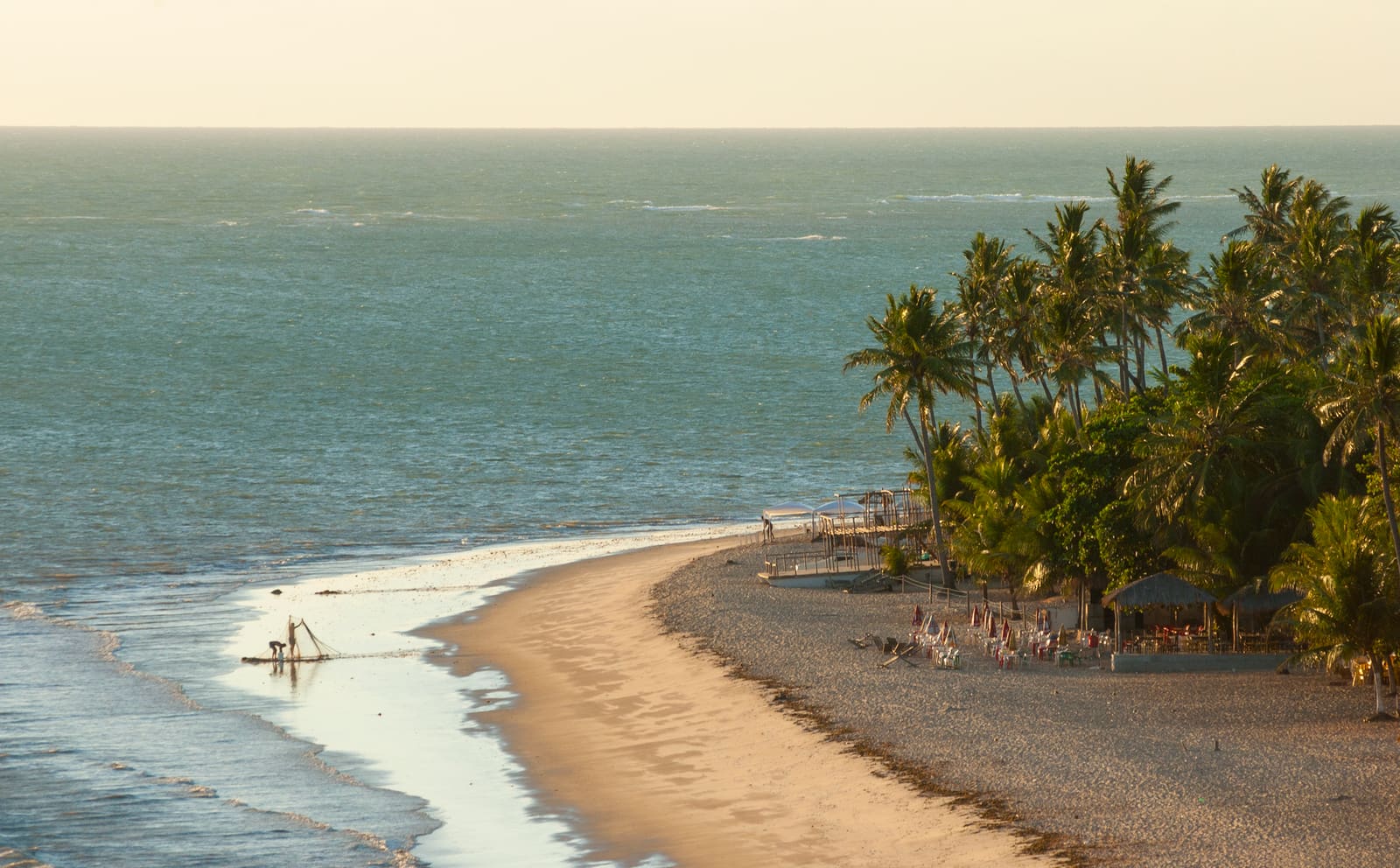
Come with us and enjoy a relaxing day trip to the coast of João Pessoa. We'll explore the stunning Tambaba, and Coqueirinho Beaches.
8 h 30 min
from US$ 26
João Pessoa deserves 4 to 5 days: enough for the city waterfront, the trip to Picãozinho, the historic center and sunset at Jacaré Beach, with time left to rest. The best window runs from October to December, with November the driest month (21.1 mm over 5 days) and highs of 30.1 to 30.9 °C; from April to August it rains far more, with 368.7 mm over 20 days in June.
João Pessoa was founded in 1585 on the banks of the Sanhauá River and was the third capital established by the Portuguese in Brazil, after Salvador and Rio de Janeiro. It grew up surrounded by the Atlantic Forest and still keeps an almost untouched piece of it inside the city limits, the Mata do Buraquinho, which earned it a reputation as the greenest capital in the Northeast. At the eastern tip of the municipality lies Ponta do Seixas, the easternmost point in the Americas: this is where, near the Cabo Branco Lighthouse, the sun rises first on the whole continent.
The climate is warm all year, with highs between 29 and 31 °C and little change from one month to the next. What changes is the rain: fall and winter, from April to August, bring most of the downpours, peaking in June, when the monthly total tops 360 mm; spring and summer, from September to February, are dry, with 21 to 37 mm in October, November and December, the best window for the beach and for boat trips to the natural pools.
The city's signature outing happens every afternoon at Jacaré Beach, at the mouth of the Paraíba River: around 5:00 p.m., the saxophonist Jurandy do Sax climbs into a canoe and crosses the river playing Ravel's Bolero, following the line of light the sun draws on the water before it sets, a tradition repeated thousands of times since 2001. On the city waterfront, the strip of Tambaú, Cabo Branco and Bessa has hotels, a seaside promenade and the departure point for the natural pools of Picãozinho. The historic center, a national heritage site, is full of colonial houses and churches such as São Francisco; on the other side of town, the Cabo Branco Station, designed by Oscar Niemeyer, hosts science and art exhibits with a view of the sea.
Updated on October 19, 2026
A cliff at the easternmost point in the Americas, where the sun rises first on the continent; the lighthouse marks the meeting of sea and forest.
A city beach with a seaside promenade, hotels and the departure point for catamarans to the natural pools of Picãozinho.
The northernmost beach on the waterfront, with a wide strip of sand and fewer crowds than Tambaú and Cabo Branco.
Colonial houses protected as national heritage, with the 17th-century Franciscan complex as the main landmark.
A science, culture and arts center designed by Oscar Niemeyer, with a view of the sea.
A remnant of Atlantic Forest inside the city limits, with guided trails among ipê and embaúba trees.
A coral reef about 2 km from Tambaú Beach, reachable by catamaran at low tide, with shallow, crystal-clear water.
Every evening, a saxophonist crosses the Paraíba River in a canoe playing Ravel's Bolero, at the river mouth near Cabedelo.
Brazil is in the Southern Hemisphere, so the seasons are reversed compared with Europe and North America: summer runs from December to March and winter from June to August. In João Pessoa the heat is constant: summer brings highs of 30.9 to 31.2 °C and lows of 24.8 to 25.2 °C between December and March, and winter is mild; in July, the coolest month, the average high is 28.7 °C and the average low is 21.9 °C.
What changes is the rain. November is the driest month, with 21.1 mm over 5 days, followed by October (31 mm over 6 days) and December (36.6 mm over 5 days). June is the wettest, with 368.7 mm over 20 days, followed by May (287.7 mm over 17 days) and July (284.9 mm over 20 days).
For the beach and the trip to Picãozinho, the best window runs from October to December, and it rains less overall from September to February. From April to August it rains more, peaking in June, but the heat holds. Boat trips to the natural pools also depend on low tide, not on the season.
| Month | High | Low | Rain | Rainy days | Rating |
|---|---|---|---|---|---|
| January | 31 °C | 25 °C | 86 mm | 9 | Good |
| February | 31 °C | 25 °C | 106 mm | 9 | Fair |
| March | 31 °C | 25 °C | 172 mm | 12 | Fair |
| April | 31 °C | 24 °C | 236 mm | 16 | Fair |
| May | 30 °C | 23 °C | 288 mm | 17 | Fair |
| June | 29 °C | 22 °C | 369 mm | 20 | Fair |
| July | 29 °C | 22 °C | 285 mm | 20 | Fair |
| August | 29 °C | 22 °C | 134 mm | 16 | Fair |
| September | 29 °C | 23 °C | 74 mm | 10 | Good |
| October | 30 °C | 24 °C | 31 mm | 6 | Good |
| November | 31 °C | 25 °C | 21 mm | 5 | Good |
| December | 31 °C | 25 °C | 37 mm | 5 | Good |
Monthly averages for 1991-2020 from INMET (Brazil's National Institute of Meteorology). The rating combines rainfall, temperature and humidity.
In summer (December to February), João Pessoa has highs of around 31 °C (88 °F) and lows of 25 °C (77 °F), and it is the wetter season, with about 76 mm of rain spread over about 8 days a month. The days are hot and call for beach time and shade.
In fall (March to May), João Pessoa has highs of around 31 °C (88 °F) and lows of 24 °C (75 °F), and it is the wetter season, with about 232 mm of rain spread over about 15 days a month. The days are hot and call for beach time and shade.
In winter (June to August), João Pessoa has highs of around 29 °C (84 °F) and lows of 22 °C (72 °F), and it is the wetter season, with about 262 mm of rain spread over about 19 days a month. The days are hot and call for beach time and shade.
In spring (September to November), João Pessoa has highs of around 30 °C (86 °F) and lows of 24 °C (75 °F), and it is the driest time of year, with about 42 mm of rain a month. The days are hot and call for beach time and shade.
Weather, crowds, prices and what is happening at the destination in each period. Tap a month to open its full page; the colored dot shows how good the time is for a visit.
At the height of the June festivals, the city sets up arraiás (festival grounds) with forró, quadrilha square dancing and traditional food, with the main hub at Parque Solon de Lucena.
Free concerts in historic churches and landmarks spread classical music across the city.
New Year's Eve is celebrated on the Tambaú and Cabo Branco beaches, with concerts and fireworks by the sea.
Recurring annual events: exact dates change every year, so confirm them before you plan your trip.
The gateway is Presidente Castro Pinto International Airport (JPA), in João Pessoa, about 11 km from the center. From there, taxis and ride-hailing apps reach the waterfront quickly. Routes and airlines change often; the safest approach is to check them when planning your trip.
By road, João Pessoa is 120 km from Recife (about 2 hours), 185 km from Natal (about 2.5 hours) and 125 km from Campina Grande (about 1.5 hours).
Tambaú, Cabo Branco and Manaíra make up the city waterfront with the most hotels, restaurants and infrastructure, all linked by the seaside promenade. Bessa, farther north, is quieter.
Rates change with the dates: confirm the price on Booking.com.
The best window runs from September to February, drier and sunnier, ideal for the beach and the Picãozinho natural pools; the months with the least rain are November, October and December. From April to August it rains more, peaking in June. The heat is constant all year.
Yes. Ponta do Seixas, in the Cabo Branco neighborhood, is the easternmost point in the Americas, which means the sun rises there before anywhere else on the continent, hence the nickname "Porta do Sol" (Sun Gate).
Four to five days is enough to combine the city waterfront, the trip to Picãozinho, the historic center and sunset at Jacaré, with time to rest. If you want to extend your trip to the beaches of the northern or southern Paraíba coast, you will need more days.
For the city waterfront, no: you can walk and use ride-hailing between Tambaú, Cabo Branco and Manaíra. A car helps for the historic center, the Botanical Garden and excursions along the Paraíba coast.
It is the city's best-known tradition: every evening, a saxophonist crosses the Paraíba River in a canoe playing Ravel's Bolero, following the light of the setting sun on the water. It takes place at Jacaré Beach, on the border with Cabedelo.
João Pessoa is more compact and relaxed, with a short city waterfront and calmer sea; Recife is bigger, with more nightlife and a denser urban fabric. Both have a significant historic center and are less than two hours from each other by car.
The weather and population data in this guide come from official agencies and open databases. Entry requirements and health recommendations change: always check the official source linked.


